
Jane Wells
Jane Wells, born on March 31, 1961, is a seasoned journalist with extensive experience in the news industry. She is known for her sharp observations and in-depth investigations, having reported on numerous major news events.
Jane Wells, born on March 31, 1961, is a seasoned journalist with extensive experience in the news industry. She is known for her sharp observations and in-depth investigations, having reported on numerous major news events.
Muhammad, also known as the Prophet Muhammad, is the founder of Islam. It is believed that he received revelations from the Angel Gabriel in 610 AD, marking the beginning of his mission to spread Islam. Born in Mecca, in the Arabian Peninsula, he passed away on June 8, 632. Muhammad's life had a profound impact on the development of Islam and the formation of the global Muslim community.

Merve Kavakc? is a notable politician recognized for her active role in the political arena. Born in August 1968, she has made substantial contributions to her nation's political landscape.
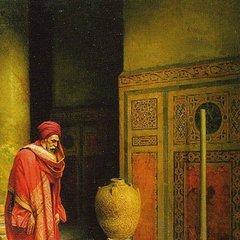
Malik ibn Anas, born in 711 and died in 795, was a prominent Islamic legal scholar. His life and academic achievements have had a profound impact on history.
Amr ibn al-As (c. 585 – 664) was a prominent Arab military commander and statesman during the early Islamic period. He is widely recognized as one of the most successful conquerors in Islamic history and served as the first governor of Egypt under the Rashidun and Umayyad Caliphates. As a close companion and supporter of the Prophet Muhammad, Amr played a pivotal role in the expansion of the Islamic Empire. His most significant achievement was the conquest of Egypt, a campaign that not only reshaped the geopolitical landscape of the Eastern Mediterranean but also opened the door for the spread of Islamic culture and civilization in North Africa. Amr's military career spanned the era of the Prophet, the Rashidun Caliphate, and the early Umayyad Dynasty. Renowned for his strategic acumen and diplomatic skills, he is often cited by historians as a model of military leadership that combined pragmatism with military prowess. Beyond his military exploits, Amr was instrumental in establishing administrative systems in Egypt, leaving a lasting legacy that influenced the governance of the region for centuries. He is revered as a foundational figure in the history of Egypt and a key architect of the Islamic Golden Age.

Ibn Ata Allah, also known as Muhammad ibn Muhammad ibn 'Ata Allah al-Iskandari, was a prominent Arab philosopher, theologian, and writer during the 13th to 14th centuries. He was a significant figure in Sufism and his works covered various fields such as philosophy, theology, and mysticism, which had a profound impact on later generations.
Limited information is available about Al-Fudhayl bin 'Iyyadh, who lived in the year 803 AD. His profession and category are unknown.
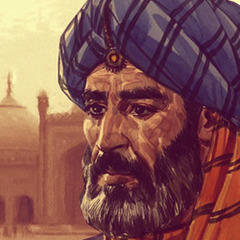
Ibn Taymiyyah was a renowned philosopher and Islamic scholar who lived from January 22, 1263, to September 26, 1328. He made significant contributions to Islamic jurisprudence, theology, and philosophy, and his works have had a profound impact on Islamic thought and practice.
Abu Madyan, born in 1126 and died in 1198, was a scholar whose identity and profession remain unknown. His life experience and contributions are currently limited, and detailed information is not available.
Abu Dawood, born in 817 and died in 889, was a historical figure whose profession and category remain unclear.