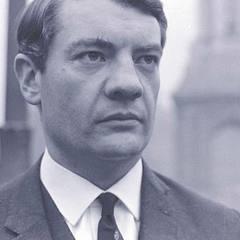
David Thornley
David Thornley, a politician, was born on July 31, 1935, and passed away on June 18, 1978. He was active in Canadian politics and held several important positions.
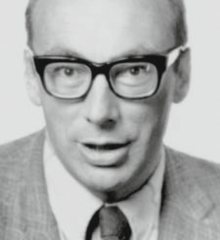
David Thornley, a politician, was born on July 31, 1935, and passed away on June 18, 1978. He was active in Canadian politics and held several important positions.
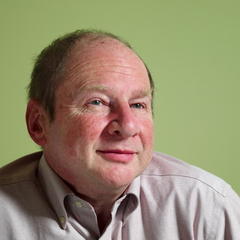
Hal Abelson is a renowned computer scientist and educator. Born on April 26, 1947, he is currently a professor at the Massachusetts Institute of Technology (MIT). Professor Abelson has made significant contributions to the field of computer science, particularly in programming languages, software engineering, and computer ethics. His research has had a profound impact on computer science education and practice.
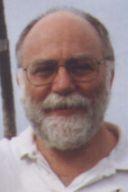
L Peter Deutsch is an entrepreneur born on August 7, 1946. He has had a profound impact on the fields of computer science and software engineering, particularly in the development of programming languages and software tools.
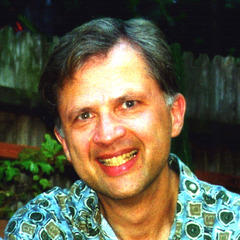
Gerald J. Popek was a renowned computer scientist, born on September 22, 1946, and passed away on July 20, 2008. He made significant contributions to the field of computer science, particularly in the areas of operating systems and virtualization technology.

Maria Klawe is a prominent computer scientist and academic leader with a significant impact in the field of computer science. Born in 1951, she is known for her research in software engineering, programming languages, and computer graphics. Professor Klawe served as the head of the Department of Computer Science at Carnegie Mellon University and became the sixth president of Simon Fraser University in 2012.
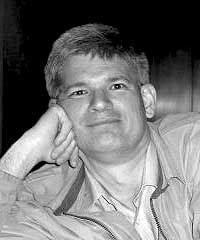
Guy Steele (born October 2, 1954) is an American computer scientist known for his pioneering work in programming language design and parallel computing. He co-designed the Scheme programming language, contributed to the Common Lisp standard, and was a key author of the Java Language Specification. Steele earned his bachelor's degree from MIT and his Ph.D. from Carnegie Mellon University. He has worked at MIT, Carnegie Mellon, Tartan Labs, Thinking Machines, Sun Microsystems, and Oracle. A member of the National Academy of Engineering and an ACM Fellow, Steele has received numerous awards for his contributions to programming languages and compiler optimization. His work has profoundly influenced functional programming and parallel computing paradigms.
Stan Kelly-Bootle, born in 1929 in the United Kingdom, was a renowned author whose works spanned various fields, including literature, philosophy, and technology. Known for his unique perspective and in-depth analysis of complex issues, Kelly-Bootle made significant contributions to the understanding of technology and its impact on society.
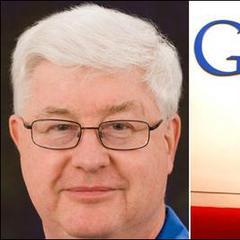
Brian Reid is a renowned computer scientist born in 1949. He has made significant contributions to the field of computer science, particularly in the areas of file systems, distributed systems, and database management.
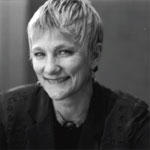
Anita Borg was an outstanding computer scientist who made significant contributions to the field of computer science, particularly in promoting women's participation in the discipline. Born on January 17, 1949, she passed away on April 6, 2003.
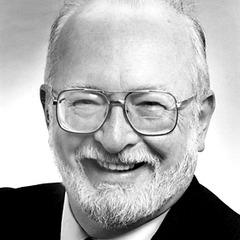
Paul Lauterbur (May 6, 1929 – March 27, 2007) was an American chemist known for his pioneering work in magnetic resonance imaging (MRI). He invented a method using gradient magnetic fields to spatially encode NMR signals, laying the foundation for MRI technology. Lauterbur shared the 2003 Nobel Prize in Physiology or Medicine with Peter Mansfield for their contributions to medical imaging. Born in Sidney, Ohio, he studied at Case Western Reserve University and earned his Ph.D. from the University of Pittsburgh. He spent most of his career at the University of Illinois at Urbana-Champaign. His work revolutionized medical diagnostics, enabling non-invasive, high-resolution imaging of internal organs. Lauterbur's legacy continues to save millions of lives worldwide.