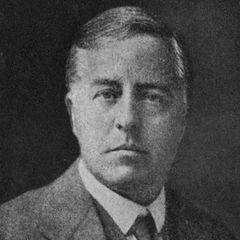
James Jeans
James Jeans was an influential British physicist known for his contributions to astrophysics and cosmology. His research encompassed stellar structure and the origins of the universe, having a profound impact on modern physics.
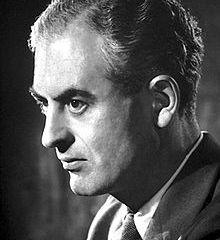
James Jeans was an influential British physicist known for his contributions to astrophysics and cosmology. His research encompassed stellar structure and the origins of the universe, having a profound impact on modern physics.
Karl Pearson, born on March 27, 1857 and died on April 27, 1936, was a renowned British mathematician and statistician, often hailed as one of the founders of modern statistics. He made significant contributions to the fields of statistics, biometry, and genetics, particularly in the development of concepts and methods such as correlation coefficients, regression analysis, and hypothesis testing.
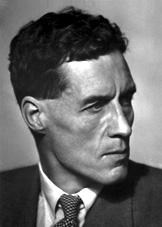
Physicist, Chairman of the British Atomic Energy Authority, Nobel Prize in Physics winner, made significant contributions to nuclear physics and quantum mechanics.
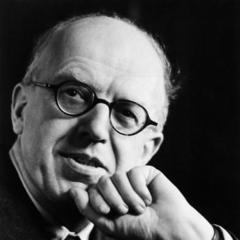
C.P. Snow was a British physicist, mathematician, and writer, renowned for his contributions to quantum mechanics and his science fiction novels. His career encompassed chemistry, physics, and literature, and he is celebrated for his ability to connect the scientific and literary worlds.
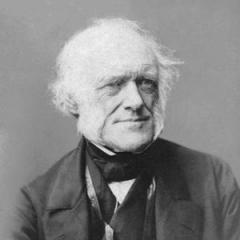
Charles Lyell, born on November 14, 1797 and died on February 22, 1875, was a renowned lawyer and geologist from the United Kingdom. He is best known for his extensive research in geology and his influential book 'Principles of Geology,' which had a profound impact on the development of the field.
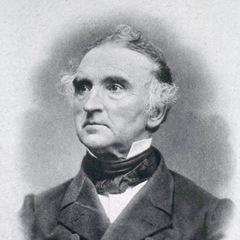
Justus von Liebig, a German chemist born on May 12, 1803, and died on April 18, 1873, is considered one of the founders of organic chemistry. He made significant contributions to the development of agricultural chemistry and food science.
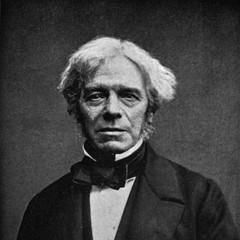
Michael Faraday was an English physicist and chemist, born on September 22, 1791, and died on August 25, 1867. He made significant contributions to the field of electromagnetism, particularly the discovery of electromagnetic induction, which had a profound impact on the development of the electric power industry and electrical engineering.

Richard P. Feynman was a renowned theoretical physicist known for his contributions to quantum mechanics and quantum electrodynamics. He was also an exceptional physicist in the field of physics education, with popular science books like 'Surely You're Joking, Mr. Feynman!' that have won the hearts of readers.
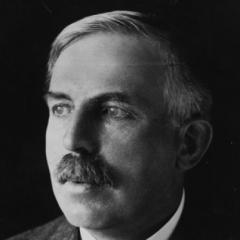
Ernest Rutherford, a British physicist, is renowned as the founder of nuclear physics. Born on August 30, 1871, in New Zealand, he passed away on October 19, 1937, in the United Kingdom. Rutherford made significant breakthroughs in the study of radioactivity, proposed the nuclear model of the atom, and discovered the proton.
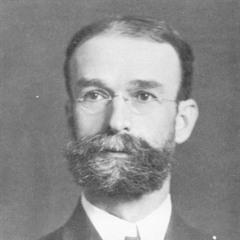
Theobald Smith, born on July 31, 1859, and died on December 10, 1934, was a renowned medical doctor. He made significant contributions to the field of medicine, particularly in the study and treatment of parasitic diseases.