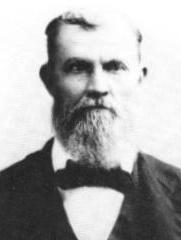
George C. Kimble
George C. Kimble, born on March 6, 1803, and died on March 6, 1836. His profession and category are unknown, and his life story and contributions are not well-documented.
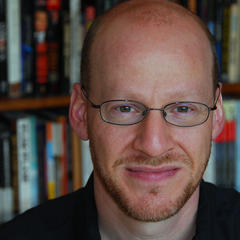
George C. Kimble, born on March 6, 1803, and died on March 6, 1836. His profession and category are unknown, and his life story and contributions are not well-documented.
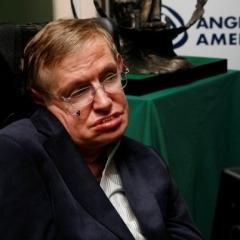
Stephen Hawking was a renowned British theoretical physicist known for his contributions to the fields of black hole theory and cosmology. Born on January 8, 1942, he overcame the challenges of ALS to become a global icon of science and perseverance.
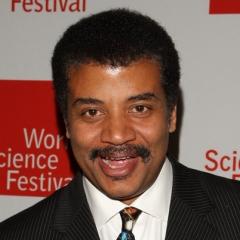
Neil deGrasse Tyson is an American astrophysicist, science communicator, and television personality. Born on October 5, 1958, he is renowned for his deep understanding of the cosmos and his ability to popularize scientific knowledge. Tyson grew up in New York City and earned a Ph.D. in astronomy from Columbia University. He served as the director of the Hayden Planetarium at the American Museum of Natural History and has been a member of various scientific committees.
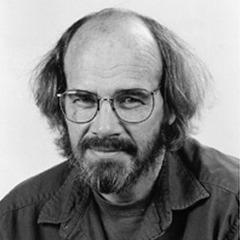
Jack Horner is a renowned paleontologist born on June 15, 1946. He has made significant contributions to the study of dinosaurs, particularly in the reconstruction of dinosaur skeletal fossils and dinosaur behavior. Professor Horner is highly respected in the academic community, and his research has had a profound impact on the public's understanding of dinosaurs.
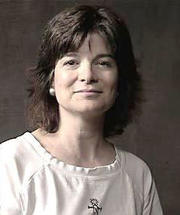
Carolyn Porco is a renowned scientist known for her contributions to planetary science. Born on March 6, 1953, she served as the principal imaging scientist for the Cassini mission to Saturn. Porco's research focuses on Saturn and its moons, providing profound insights into the distant planet system for humanity.
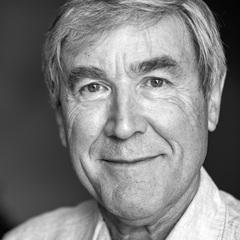
Paul Davies, born April 22, 1946, is a British theoretical physicist, cosmologist and prolific science writer. After earning his PhD at Cambridge, he held faculty positions at Oxford, UC San Diego and the Australian National University, focusing on cosmology, quantum gravity, black‑hole thermodynamics and the physics of life's origins. Known for his interdisciplinary outlook and clear popular‑science books such as "The Mind of God" and "The Goldilocks Enigma," Davies has been elected Fellow of the Royal Society and Fellow of the American Physical Society. His research advances fundamental physics, while his outreach has shaped public understanding of the universe and its deeper philosophical implications.
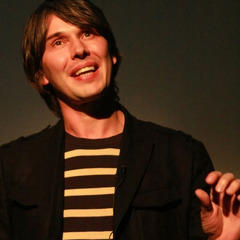
Brian Cox is a renowned British physicist known for his contributions to particle physics and cosmology. Born on March 3, 1968, he has been a senior lecturer at the University of Manchester's School of Physics and Astronomy since 1991. Dr. Cox has made significant contributions to both experimental and theoretical particle physics, particularly in the context of the Large Hadron Collider (LHC). His research focuses on seeking new physical phenomena beyond the Standard Model.
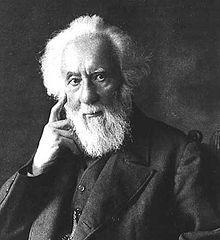
William Huggins was a British astronomer known for his contributions to the field of astronomy. His work in spectroscopy provided significant insights into the physical properties of stars and the universe.
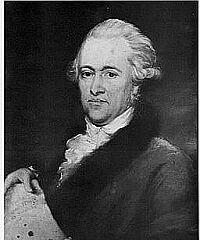
William Herschel was a prominent British astronomer known for his significant contributions to the field. He discovered the planet Uranus and conducted extensive research on the composition of stars and planets. Herschel also made notable advancements in the manufacturing of optical instruments, inventing the Herschel telescope.
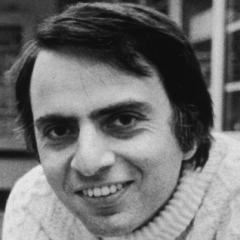
Carl Sagan was an American astronomer, cosmologist, author, and science communicator, born on November 9, 1934, in Brooklyn, New York. He is renowned for his profound research into the cosmos and his dedication to popularizing science. Sagan proposed numerous theories about the origin of the universe and life, and he made complex scientific knowledge accessible to the public with his unique perspective and clear, engaging writing style.