Rozsa Peter
Rozsa Peter, born on February 17, 1905, and died on February 16, 1977, was a renowned mathematician of the 20th century, known for his contributions to algebraic geometry and number theory.
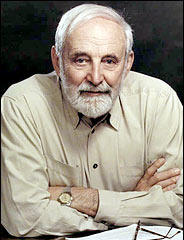
Rozsa Peter, born on February 17, 1905, and died on February 16, 1977, was a renowned mathematician of the 20th century, known for his contributions to algebraic geometry and number theory.
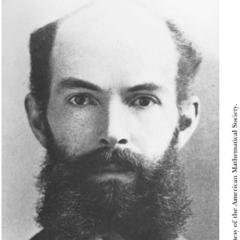
William Fogg Osgood was an American mathematician known for his contributions to mathematical analysis, number theory, and mathematical physics. His academic status and influence reached a peak in the early 20th century.
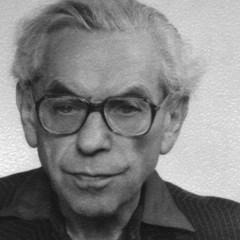
Paul Erdős was a renowned mathematician known for his contributions to combinatorics, graph theory, number theory, and probability theory. Born on March 26, 1913, and passing away on September 20, 1996, Erdős was famous for his unique collaborative style and passion for mathematics. He is known for his extensive collaboration with many mathematicians, co-authoring over 1,500 papers.
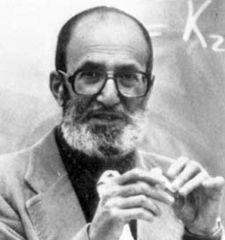
Paul Halmos was a renowned mathematician known for his contributions to functional analysis and probability theory. His research had a profound impact on the development of modern mathematics.
Simeon Denis Poisson was a prominent French mathematician born on June 21, 1781, and died on April 25, 1840. He made significant contributions to the fields of probability theory, differential equations, and mathematical physics.
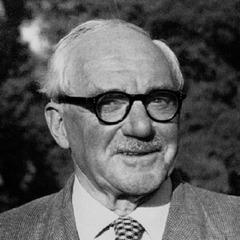
John Edensor Littlewood was an outstanding British mathematician known for his contributions to number theory, analysis, and probability theory. His research spanned a wide range of areas including group theory in number theory, number-theoretic functions, and limit theorems in probability theory.
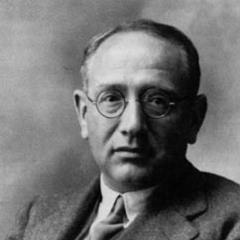
George Polya was a renowned mathematician known for his contributions to combinatorics, graph theory, and mathematics education. His research emphasized intuition and heuristic methods, which have had a profound impact on mathematicians and educators of later generations.
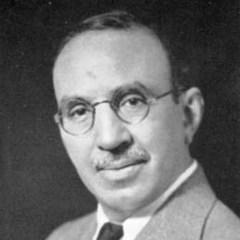
Edward Kasner was a renowned mathematician known for his contributions to number theory, mathematical logic, and mathematics education. Born on April 2, 1878, and passing away on January 7, 1955, Kasner's influence in the field of mathematics was profound, with his research spanning various mathematical domains, including number theory and mathematical logic.
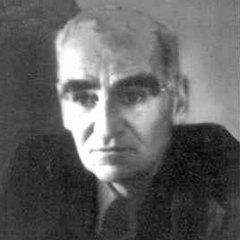
Eric Temple Bell was a prominent mathematician known for his contributions to combinatorics and graph theory. Born on February 7, 1883, and passing away on December 21, 1960, Bell's research spanned various areas including graph theory, combinatorics, number theory, and mathematical education. His work has had a profound impact on mathematicians that followed.
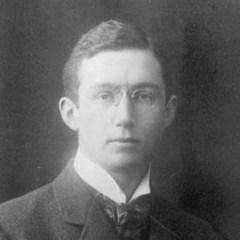
Max Dehn, a German mathematician born on November 13, 1878, and died on June 27, 1952, is renowned for his contributions to topology, particularly his research on 3-dimensional manifolds. Dehn is known for his work on topological invariants, especially the Dehn invariant, which is a significant tool for studying 3-dimensional manifolds.