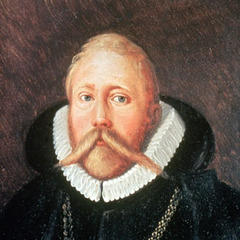
Tycho Brahe
A Danish nobleman and astronomer, known for his precise astronomical observations and instrument inventions. He founded the Tycho Brahe Observatory and had a profound impact on the development of astronomy.
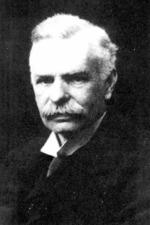
A Danish nobleman and astronomer, known for his precise astronomical observations and instrument inventions. He founded the Tycho Brahe Observatory and had a profound impact on the development of astronomy.
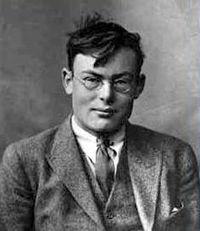
Frank P. Ramsey was a British philosopher born on February 22, 1903, and died on January 19, 1930. He made significant contributions to logic, mathematical philosophy, and probability theory.
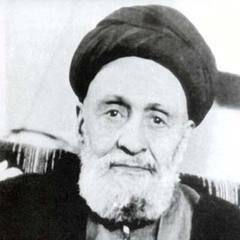
Abol-Ghasem Kashani, born in 1882 and died on March 14, 1962, was an individual of an unknown profession. Due to limited information, detailed biographical details are not available.
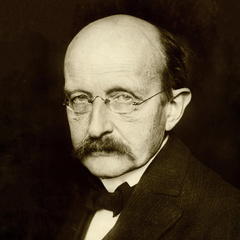
Max Planck, born on April 23, 1858 in Germany, died on October 4, 1947. He was a renowned German physicist and one of the founders of quantum theory, winning the Nobel Prize in Physics in 1918 for his discovery of Planck's constant.
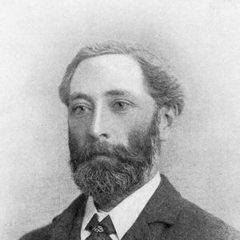
W. W. Rouse Ball was a distinguished British mathematician recognized for his work in geometry, number theory, and the history of mathematics. He held the position of professor at the University of Cambridge and authored numerous influential textbooks.
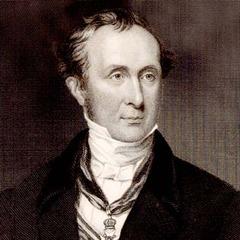
Sir Roderick Murchison, a British baronet, was a prominent geologist. Born on February 22, 1792, and died on October 22, 1871, he made significant contributions to the field of geology, particularly in the study of petrology.
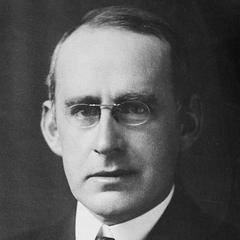
Arthur Eddington was a distinguished British astronomer recognized for his contributions to astrophysics and cosmology. He is particularly renowned for his observations during the 1919 solar eclipse, which validated Einstein's theory of general relativity. Eddington's legacy in astronomy has significantly advanced our comprehension of the cosmos.
George Iles (1852-1942) was a renowned author from the United Kingdom. His works spanned a variety of fields, including history, literature, and philosophy. Iles was known for his in-depth research and attention to detail, and his works have had a profound impact on posterity.
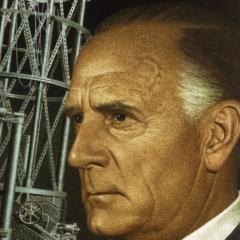
Edwin Powell Hubble was an American astronomer known for his significant contributions to observational cosmology and extragalactic astronomy. His discovery in 1929 that the universe is expanding was a major breakthrough, leading to the acceptance of the Big Bang theory. Hubble's work also provided evidence for the existence of galaxies beyond the Milky Way and helped establish Hubble's Law.
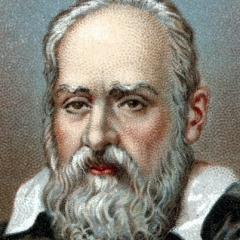
Galileo Galilei, an Italian physicist, astronomer, mathematician, and philosopher, is considered the father of modern science. He was born on February 15, 1564, and died on January 8, 1642. Galileo made significant contributions to the fields of physics, astronomy, mathematics, and philosophy. He discovered the four moons of Jupiter through his telescope, supporting Copernicus' heliocentric model, and proposed the law of free fall and other scientific theories.