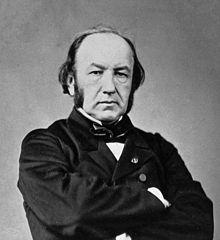
Claude Bernard
Claude Bernard was a French physiologist born on July 12, 1813, and died on February 10, 1878. He made significant contributions to the field of physiology, particularly in the study of the digestive system and the nervous system.
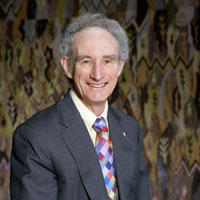
Claude Bernard was a French physiologist born on July 12, 1813, and died on February 10, 1878. He made significant contributions to the field of physiology, particularly in the study of the digestive system and the nervous system.
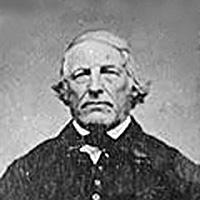
Samuel Wilson (September 13, 1766 – July 31, 1854) was an American meat packer who is widely recognized as the original inspiration for the national personification of the United States, 'Uncle Sam.' Born in Arlington, Massachusetts, he supplied barreled beef to the U.S. Army during the War of 1812, with barrels stamped 'U.S.' Soldiers jokingly referred to this as 'Uncle Sam,' linking it to Wilson. This nickname evolved into a symbol of the U.S. government, popularized through political cartoons. Wilson's contribution lies in his inadvertent creation of an enduring national icon, embodying early American patriotism and commerce.
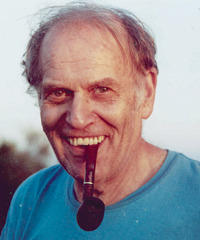
Sidney Morgenbesser was a renowned American philosopher known for his unique critical thinking and contributions to logic, epistemology, and the philosophy of language. His work has had a profound impact on the field of analytic philosophy.
Eric Baum, born on May 27, 1957, is a professional figure active in an unknown field.
Anthony Standen was an accomplished British author known for his profound insights into history and culture. His works covered a wide range of historical themes from the Middle Ages to the modern era, celebrated for their unique narrative style and attention to detail.
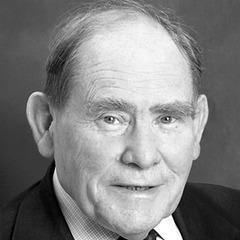
Sydney Brenner is a renowned molecular biologist known for his pioneering work in gene editing and molecular biology. In the 1970s, he discovered the first eukaryotic gene, and for his contributions to molecular biology and genetics, he was awarded the Nobel Prize in Physiology or Medicine.

J. Philippe Rushton was a prominent psychologist known for his contributions to the study of individual differences and intelligence. His research focused on the genetic basis of human intelligence and behavioral differences, and how these differences influence social and cultural development. Throughout his academic career, Rushton proposed several controversial theories, including the genetic differences in racial intelligence. His work has sparked widespread discussion in the fields of psychology, anthropology, and genetics.
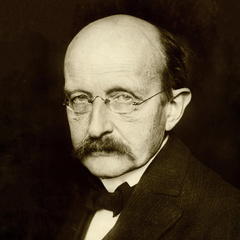
Max Planck, born on April 23, 1858 in Germany, died on October 4, 1947. He was a renowned German physicist and one of the founders of quantum theory, winning the Nobel Prize in Physics in 1918 for his discovery of Planck's constant.
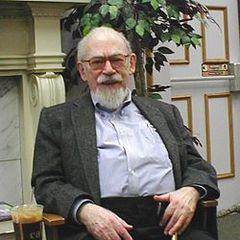
William Tenn, born on May 9, 1920, was an influential American science fiction author known for his unique sense of humor and profound philosophical insights. His works have had a significant impact on the science fiction genre.
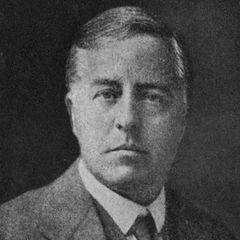
James Jeans was an influential British physicist known for his contributions to astrophysics and cosmology. His research encompassed stellar structure and the origins of the universe, having a profound impact on modern physics.