
Edmund Berkeley
Edmund Berkeley was a prominent computer scientist, born on February 22, 1909, and passed away on March 7, 1988. He had a significant impact on the field of computer science, particularly in the area of computer architecture.
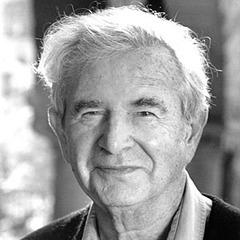
Edmund Berkeley was a prominent computer scientist, born on February 22, 1909, and passed away on March 7, 1988. He had a significant impact on the field of computer science, particularly in the area of computer architecture.
George Iles (1852-1942) was a renowned author from the United Kingdom. His works spanned a variety of fields, including history, literature, and philosophy. Iles was known for his in-depth research and attention to detail, and his works have had a profound impact on posterity.

Jim Berger is an outstanding statistician known for his contributions to statistical inference and Bayesian statistical methods. His research has had a profound impact on the field of statistics, particularly in high-dimensional data analysis, model selection, and Bayesian statistical theory.

Herman Chernoff is an esteemed applied statistician known for his contributions to statistical graphics and decision theory. Born on July 1, 1923, he has had a profound impact on the field of statistics.

Amit Priyavadan Mehta, born in 1971, is an individual whose profession and category remain unknown. His life story and contributions are currently limited in available information.
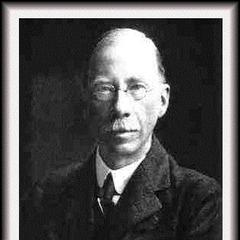
Udny Yule was a prominent British statistician born on February 18, 1871, and died on June 26, 1951. He is known for his contributions to the field of statistics, particularly in biostatistics and genetics.
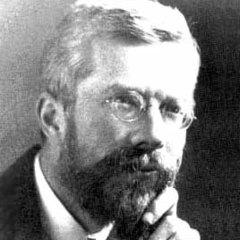
Ronald Fisher (February 17, 1890 – July 29, 1962) was a British statistician, geneticist, and evolutionary biologist, regarded as one of the founders of modern statistics. He developed key statistical methods such as analysis of variance, maximum likelihood estimation, and Fisher's exact test, and applied statistical theory to genetics and evolutionary biology, contributing to the modern evolutionary synthesis. Fisher studied mathematics and physics at Cambridge University, later worked at Rothamsted Experimental Station and University College London, and spent his final years in Australia. His work profoundly influenced experimental design, biostatistics, and population genetics, though his support for eugenics remains controversial.

Limited information is available about Jan Hatzius, born on December 17, 1968. He is an individual with an unknown profession and category.
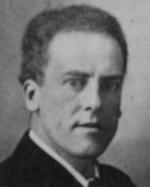
Karl Pearson, born on March 27, 1857 and died on April 27, 1936, was a renowned British mathematician and statistician, often hailed as one of the founders of modern statistics. He made significant contributions to the fields of statistics, biometry, and genetics, particularly in the development of concepts and methods such as correlation coefficients, regression analysis, and hypothesis testing.
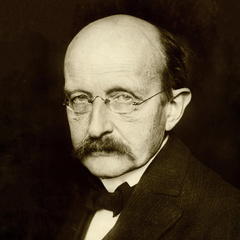
Max Planck, born on April 23, 1858 in Germany, died on October 4, 1947. He was a renowned German physicist and one of the founders of quantum theory, winning the Nobel Prize in Physics in 1918 for his discovery of Planck's constant.