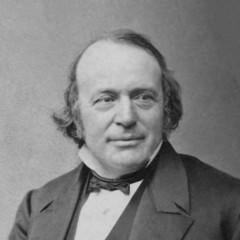
Louis Agassiz
Louis Agassiz, born on May 28, 1807 in Switzerland and died on December 14, 1873 in the United States, was a renowned geologist in the 19th century. He made significant contributions to the fields of paleontology and geology.
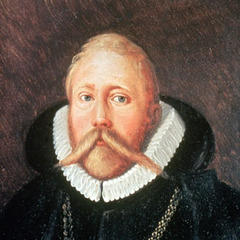
Louis Agassiz, born on May 28, 1807 in Switzerland and died on December 14, 1873 in the United States, was a renowned geologist in the 19th century. He made significant contributions to the fields of paleontology and geology.
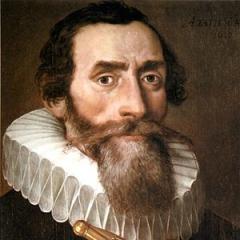
Johannes Kepler was a German astronomer, mathematician, and physicist, renowned for his research on the laws of planetary motion. He formulated the famous Kepler's laws, which describe the regularities of planetary orbits around the sun. Kepler's work had a profound impact on the development of astronomy and physics.
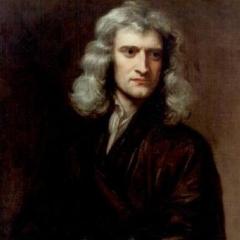
Isaac Newton was an English physicist, mathematician, and astronomer, considered one of the greatest scientists in history. He made significant contributions to physics, mathematics, and astronomy, particularly with his three laws of motion and the law of universal gravitation. Newton's work had a profound impact on the development of modern science and engineering.
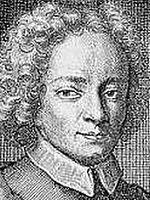
Giorgio Baglivi was an Italian physician born on September 8, 1668, and died on June 15, 1707. He made significant contributions to the field of medicine, particularly in anatomy and physiology.
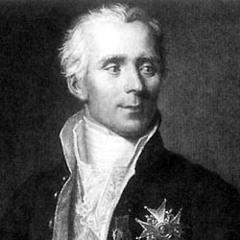
Pierre-Simon Laplace was a renowned French mathematician and astronomer born on March 23, 1749, and died on March 5, 1827. He is considered one of the founders of probability theory and celestial mechanics. Laplace's work in mathematics, astronomy, and probability has had a profound impact on the development of modern science.
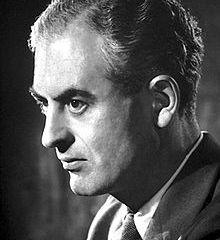
Peter Medawar was a British biologist and immunologist recognized for his work in transplantation immunology. He was awarded the Nobel Prize in Physiology or Medicine in 1960 for his discovery of immunological tolerance.
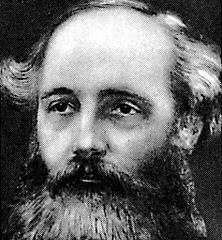
James Clerk Maxwell was an outstanding physicist known for his contributions to the field of electromagnetism. He formulated Maxwell's equations, which describe the properties of electromagnetic fields and predict the existence of electromagnetic waves. Maxwell's work has had a profound impact on modern physics and engineering.
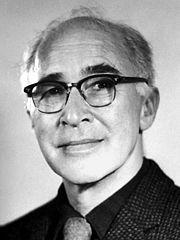
George Wald was an American biologist renowned for his research in the field of visual physiology. In the mid-20th century, his studies on retinal pigment vision significantly contributed to the understanding of human visual mechanisms. Wald was awarded the Nobel Prize in Physiology or Medicine in 1967 for his outstanding contributions to the field of visual physiology.
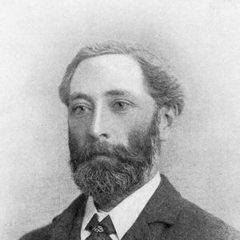
W. W. Rouse Ball was a distinguished British mathematician recognized for his work in geometry, number theory, and the history of mathematics. He held the position of professor at the University of Cambridge and authored numerous influential textbooks.
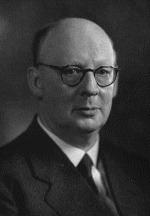
German chemist born on May 27, 1883, and died on November 22, 1943. Wolfgang Ostwald made significant contributions to the field of chemistry, particularly in colloidal chemistry and catalysis.