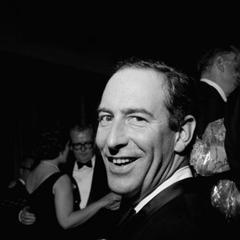
Thomas Hoving
Thomas Hoving, born on January 15, 1931, and passed away on December 10, 2009, was a significant figure in the art world, with an unspecified profession.
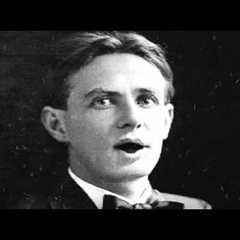
Thomas Hoving, born on January 15, 1931, and passed away on December 10, 2009, was a significant figure in the art world, with an unspecified profession.
Robert Winthrop White was a prominent psychologist, born on October 17, 1904, and passed away in 2001. He made significant contributions to the field of psychology.
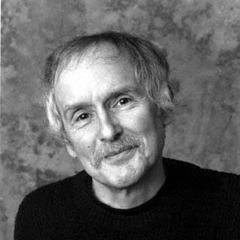
David Meltzer was an American poet, born on February 17, 1937, and passed away on December 31, 2016. His poetry is known for its unique style and profound insights into American culture.
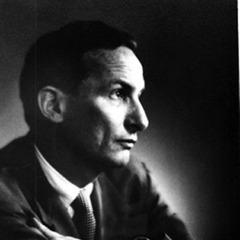
Rudolf Arnheim was a renowned art theorist and psychologist, known for his profound insights into visual art and aesthetic experience. His work spans various fields including art psychology, film theory, and visual culture.
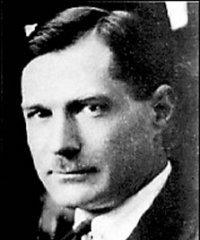
Russian author known for his dystopian novel 'We'. Born on February 1, 1884, in Taganrog, Russia, he passed away on March 10, 1937.
Bill Musselman, born on September 13, 1940, was a renowned basketball coach from the United States. He had a rich coaching experience in the basketball world, having coached multiple professional and college basketball teams, and was known for his unique coaching style and tactical arrangements.
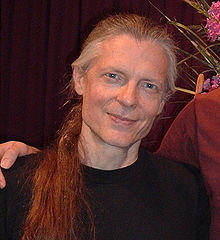
Alex Grey (b. November 29, 1953) is an American artist whose work occupies a singular position at the intersection of visionary art, spiritual imagery, anatomy, and contemporary counterculture. Best known for his meticulously rendered paintings of the human body, energy fields, and transcendental states, Grey has developed a visual language that fuses the precision of anatomical illustration with the symbolism of religious iconography and the experiential intensity of mystical practice. His art is often described as “spiritual realism,” a mode in which the visible body becomes a portal to invisible dimensions of consciousness, death, transformation, and cosmic order. Grey’s significance lies not only in his technical mastery but also in his ability to reintroduce questions of the sacred into late twentieth- and early twenty-first-century visual culture. In an art world long shaped by abstraction, conceptualism, and market-driven spectacle, he has consistently pursued themes of embodiment, transcendence, and inner awakening. His best-known works, including the Sacred Mirrors series and Sacrament, have made him a major reference point for viewers interested in art as meditation, healing, and revelation. He is also widely known through his collaborations with the musician Tool and through The Chapel of Sacred Mirrors (CoSM), the spiritual-art environment he co-founded with his wife, Allyson Grey. As an artist, Grey is celebrated for his luminous palettes, symmetrical compositions, layered anatomical sections, and mandala-like structures. As a cultural figure, he has become an influential voice in visionary art, psychedelic aesthetics, and New Age spirituality. Admired by many as a contemporary interpreter of the sacred body, and sometimes criticized for the overt symbolism of his imagery, Grey remains a central figure in the history of spiritual art in the United States.
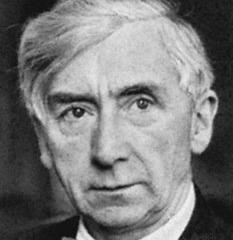
Herbert Read was a British poet, critic, and philosopher, known for his contributions to aesthetics and advocacy for the arts. His work often delved into themes of social justice and the role of the artist in society.
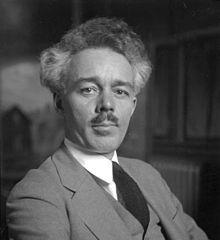
Lawren Harris, born on October 23, 1885, and died on January 29, 1970, was a Canadian painter known for his paintings of the Canadian north. His work, characterized by cold tones and geometric abstraction, has had a profound impact on the Canadian art scene.
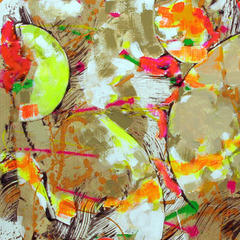
Walter Darby Bannard was an American painter known for his distinctive style and bold use of color. His works typically feature urban landscapes and portraitures, showcasing the diversity of American society and culture.