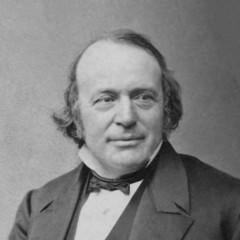
Louis Agassiz
Louis Agassiz, born on May 28, 1807 in Switzerland and died on December 14, 1873 in the United States, was a renowned geologist in the 19th century. He made significant contributions to the fields of paleontology and geology.
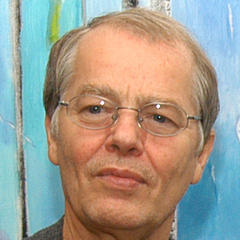
Louis Agassiz, born on May 28, 1807 in Switzerland and died on December 14, 1873 in the United States, was a renowned geologist in the 19th century. He made significant contributions to the fields of paleontology and geology.
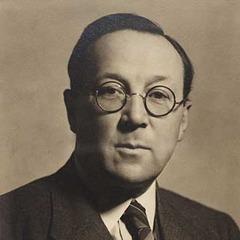
Robert Watson-Watt was an outstanding developer, born on April 13, 1892, and died on December 5, 1973. He made significant contributions to radar technology and is known as a pioneer in the field.
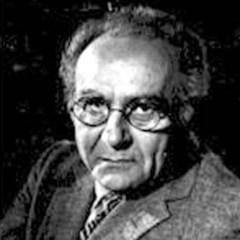
Jacob Bronowski was an outstanding mathematician born on January 18, 1908, and died on August 22, 1974. He made significant contributions to the field of mathematics, particularly in topology and mathematical physics.
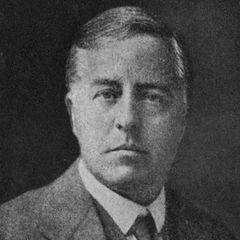
James Jeans was an influential British physicist known for his contributions to astrophysics and cosmology. His research encompassed stellar structure and the origins of the universe, having a profound impact on modern physics.
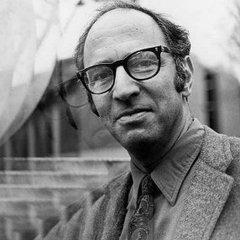
Thomas Kuhn (July 18, 1922 - June 17, 1996) was an influential American philosopher of science, known for his contributions to the theory of scientific revolution. His work has had a profound impact on the fields of philosophy of science, history of science, and science studies.
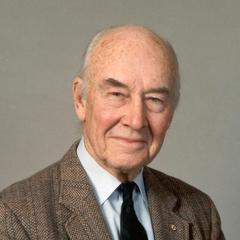
John Tuzo Wilson was a renowned geologist known for his contributions to the theory of plate tectonics. Born on October 24, 1908, and passing away on April 15, 1993, his research had a profound impact on the development of geology.
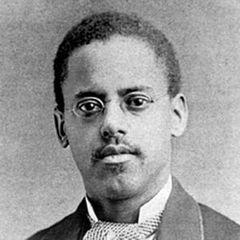
Lewis Howard Latimer was an African American inventor and engineer who made significant contributions to the development of the telegraph and the light bulb. He worked for the Edison Electric Light Company and is credited with improving the incandescent light bulb's filament. Latimer's work in the field of electrical engineering was pioneering and had a lasting impact on the industry.
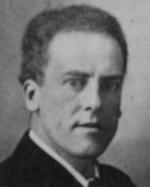
Karl Pearson, born on March 27, 1857 and died on April 27, 1936, was a renowned British mathematician and statistician, often hailed as one of the founders of modern statistics. He made significant contributions to the fields of statistics, biometry, and genetics, particularly in the development of concepts and methods such as correlation coefficients, regression analysis, and hypothesis testing.
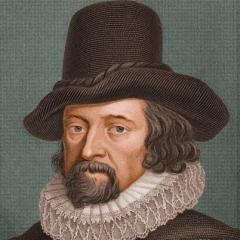
Francis Bacon, a renowned philosopher, politician, and writer, served as the Lord Chancellor of England. He is best known for his profound philosophical thoughts and extensive literary works, which have had a lasting impact on the world.
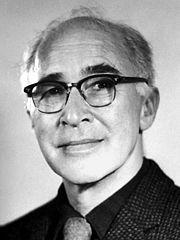
George Wald was an American biologist renowned for his research in the field of visual physiology. In the mid-20th century, his studies on retinal pigment vision significantly contributed to the understanding of human visual mechanisms. Wald was awarded the Nobel Prize in Physiology or Medicine in 1967 for his outstanding contributions to the field of visual physiology.