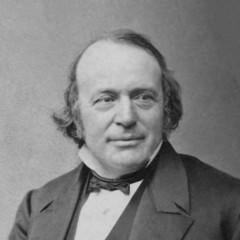
Louis Agassiz
Louis Agassiz, born on May 28, 1807 in Switzerland and died on December 14, 1873 in the United States, was a renowned geologist in the 19th century. He made significant contributions to the fields of paleontology and geology.
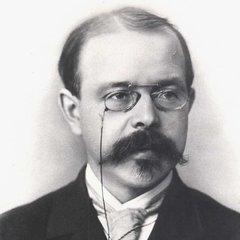
Louis Agassiz, born on May 28, 1807 in Switzerland and died on December 14, 1873 in the United States, was a renowned geologist in the 19th century. He made significant contributions to the fields of paleontology and geology.
Anthony Standen was an accomplished British author known for his profound insights into history and culture. His works covered a wide range of historical themes from the Middle Ages to the modern era, celebrated for their unique narrative style and attention to detail.
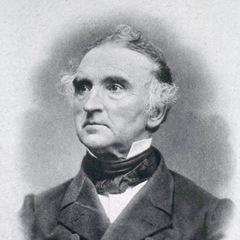
Justus von Liebig, a German chemist born on May 12, 1803, and died on April 18, 1873, is considered one of the founders of organic chemistry. He made significant contributions to the development of agricultural chemistry and food science.
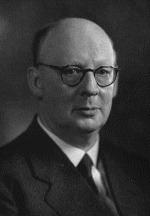
German chemist born on May 27, 1883, and died on November 22, 1943. Wolfgang Ostwald made significant contributions to the field of chemistry, particularly in colloidal chemistry and catalysis.
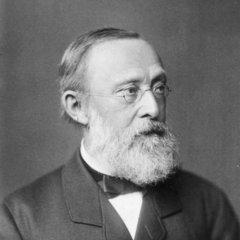
German physician and one of the founders of cellular pathology, known as one of the greatest scientists in the history of medicine. He proposed the basic principles of cellular pathology, which had a profound impact on the development of modern medicine.
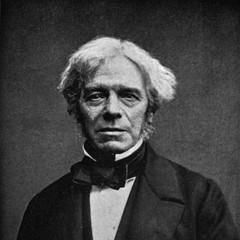
Michael Faraday was an English physicist and chemist, born on September 22, 1791, and died on August 25, 1867. He made significant contributions to the field of electromagnetism, particularly the discovery of electromagnetic induction, which had a profound impact on the development of the electric power industry and electrical engineering.
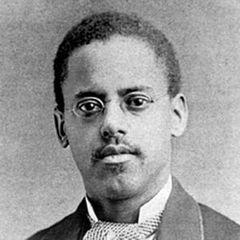
Lewis Howard Latimer was an African American inventor and engineer who made significant contributions to the development of the telegraph and the light bulb. He worked for the Edison Electric Light Company and is credited with improving the incandescent light bulb's filament. Latimer's work in the field of electrical engineering was pioneering and had a lasting impact on the industry.
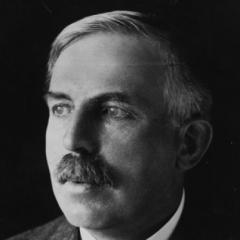
Ernest Rutherford, a British physicist, is renowned as the founder of nuclear physics. Born on August 30, 1871, in New Zealand, he passed away on October 19, 1937, in the United Kingdom. Rutherford made significant breakthroughs in the study of radioactivity, proposed the nuclear model of the atom, and discovered the proton.
Cesar Milstein was a renowned immunologist known for his pioneering work in the field of monoclonal antibody technology. He, along with Georges Köhler and Niels Kaj Jerne, was awarded the Nobel Prize in Physiology or Medicine in 1975 for their contributions to antibody engineering.
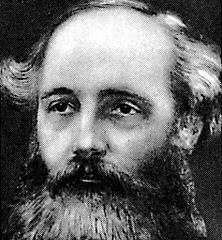
James Clerk Maxwell was an outstanding physicist known for his contributions to the field of electromagnetism. He formulated Maxwell's equations, which describe the properties of electromagnetic fields and predict the existence of electromagnetic waves. Maxwell's work has had a profound impact on modern physics and engineering.