
Buzz Aldrin
Buzz Aldrin, an American astronaut born on January 20, 1930, is renowned for his contributions to space exploration. He was the second human to walk on the Moon, alongside Neil Armstrong, during the Apollo 11 mission.
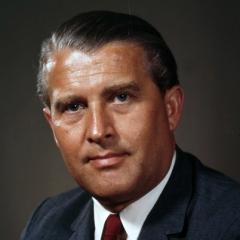
Buzz Aldrin, an American astronaut born on January 20, 1930, is renowned for his contributions to space exploration. He was the second human to walk on the Moon, alongside Neil Armstrong, during the Apollo 11 mission.
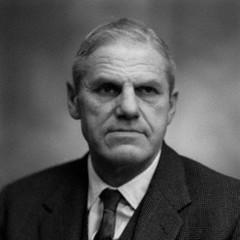
Richard van der Riet Woolley was a renowned astronomer born on April 24, 1906, and passed away on December 24, 1986. He made significant contributions to the field of astrophysics, particularly in the study of stellar evolution.
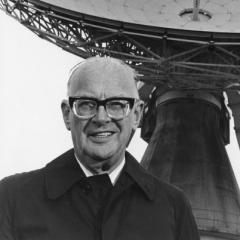
Arthur C. Clarke was a British science fiction author, writer, and science popularizer. Known for his science fiction novels and predictions about future technology, his most famous works include '2001: A Space Odyssey' and 'Rendezvous with Rama'. Clarke's science fiction novels are not only literarily valuable but also had a profound impact on science fiction films and television.
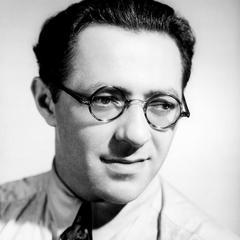
Willy Ley was a German-born American writer known for his contributions to popular science writing. His works covered a range of fields including astronomy, cosmology, and science popularization, making significant impacts on the dissemination of scientific knowledge.
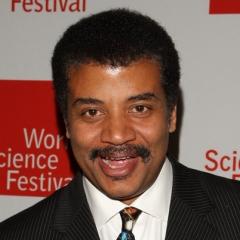
Neil deGrasse Tyson is an American astrophysicist, science communicator, and television personality. Born on October 5, 1958, he is renowned for his deep understanding of the cosmos and his ability to popularize scientific knowledge. Tyson grew up in New York City and earned a Ph.D. in astronomy from Columbia University. He served as the director of the Hayden Planetarium at the American Museum of Natural History and has been a member of various scientific committees.
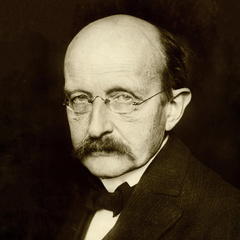
Max Planck, born on April 23, 1858 in Germany, died on October 4, 1947. He was a renowned German physicist and one of the founders of quantum theory, winning the Nobel Prize in Physics in 1918 for his discovery of Planck's constant.
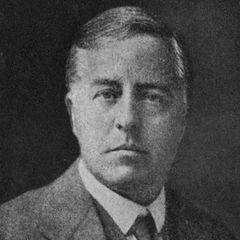
James Jeans was an influential British physicist known for his contributions to astrophysics and cosmology. His research encompassed stellar structure and the origins of the universe, having a profound impact on modern physics.
George Iles (1852-1942) was a renowned author from the United Kingdom. His works spanned a variety of fields, including history, literature, and philosophy. Iles was known for his in-depth research and attention to detail, and his works have had a profound impact on posterity.
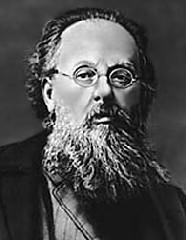
Konstantin Tsiolkovsky, born on September 17, 1857, and died on September 19, 1935, was a renowned Russian scientist, mathematician, engineer, and inventor. Known as the 'Father of Space Travel,' he made significant contributions to the fields of rocket science and space exploration. Tsiolkovsky's theories on rocket propulsion and space travel laid the groundwork for the development of modern space technology.
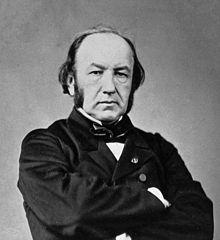
Claude Bernard was a French physiologist born on July 12, 1813, and died on February 10, 1878. He made significant contributions to the field of physiology, particularly in the study of the digestive system and the nervous system.