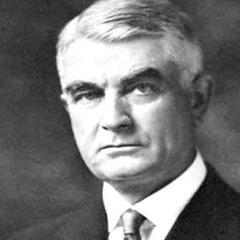
William James Mayo
William James Mayo was a renowned American physician, born on June 29, 1861, and died on July 28, 1939. He made significant contributions to the field of medicine, particularly in internal medicine and medical education.
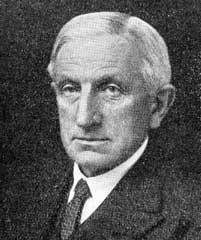
William James Mayo was a renowned American physician, born on June 29, 1861, and died on July 28, 1939. He made significant contributions to the field of medicine, particularly in internal medicine and medical education.
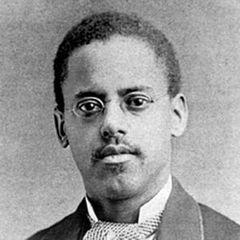
Lewis Howard Latimer was an African American inventor and engineer who made significant contributions to the development of the telegraph and the light bulb. He worked for the Edison Electric Light Company and is credited with improving the incandescent light bulb's filament. Latimer's work in the field of electrical engineering was pioneering and had a lasting impact on the industry.
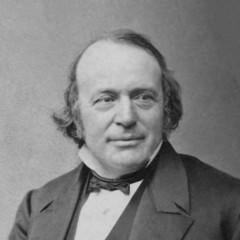
Louis Agassiz, born on May 28, 1807 in Switzerland and died on December 14, 1873 in the United States, was a renowned geologist in the 19th century. He made significant contributions to the fields of paleontology and geology.
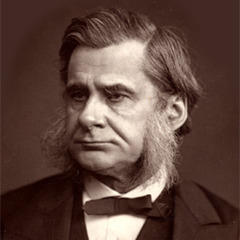
Thomas Huxley, a British biologist, was a staunch supporter of Darwin's theory of evolution. Renowned for his research in comparative anatomy, embryology, paleontology, and philosophy, Huxley made significant contributions to the field of biology. He had a profound influence on science, not only through his support of Darwin's theory of evolution but also through his role as a science popularizer and advocate for science education.
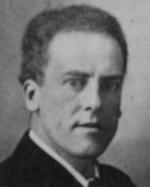
Karl Pearson, born on March 27, 1857 and died on April 27, 1936, was a renowned British mathematician and statistician, often hailed as one of the founders of modern statistics. He made significant contributions to the fields of statistics, biometry, and genetics, particularly in the development of concepts and methods such as correlation coefficients, regression analysis, and hypothesis testing.
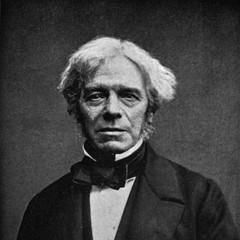
Michael Faraday was an English physicist and chemist, born on September 22, 1791, and died on August 25, 1867. He made significant contributions to the field of electromagnetism, particularly the discovery of electromagnetic induction, which had a profound impact on the development of the electric power industry and electrical engineering.
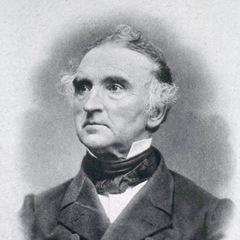
Justus von Liebig, a German chemist born on May 12, 1803, and died on April 18, 1873, is considered one of the founders of organic chemistry. He made significant contributions to the development of agricultural chemistry and food science.
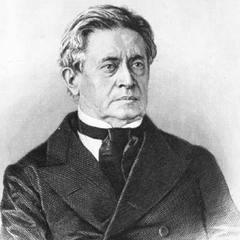
Joseph Henry was an American physicist and engineer renowned for his contributions to the study of electromagnetism. He served as a professor at the College of New Jersey (now Princeton University) and was the first Secretary of the Smithsonian Institution. Henry conducted extensive experiments in electromagnetism, leading to significant advancements in the field, including the invention of the electromagnet and contributions to the development of the telegraph.
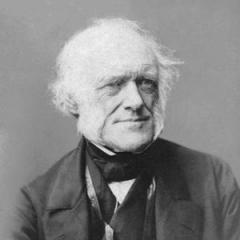
Charles Lyell, born on November 14, 1797 and died on February 22, 1875, was a renowned lawyer and geologist from the United Kingdom. He is best known for his extensive research in geology and his influential book 'Principles of Geology,' which had a profound impact on the development of the field.
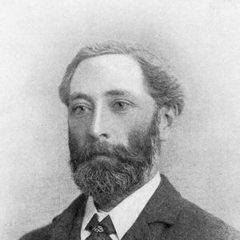
W. W. Rouse Ball was a distinguished British mathematician recognized for his work in geometry, number theory, and the history of mathematics. He held the position of professor at the University of Cambridge and authored numerous influential textbooks.