Quotessence
Home / Quotes / Quote by Alexander Hamilton

Quote by Alexander Hamilton

“The reasonableness of the agency of the national courts in cases in which the state tribunals cannot be supposed to be impartial, speaks for itself. No man ought certainly to be a judge in his own cause, or in any cause in respect to which he has the least interest or bias.”

Quote by Alexander Hamilton

Work

The Federalist

Written by Alexander Hamilton, James Madison, and John Jay, The Federalist Papers are a series of essays that advocate for the ratification of the United States Constitution. The essays, published under the pseudonym 'Publius,' delve into the philosophical underpinnings of the new government, emphasizing the need for a strong central authority while protecting individual liberties. more

Author

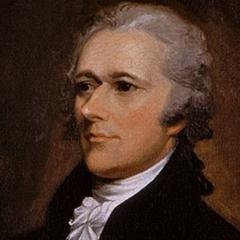
Alexander Hamilton
Alexander Hamilton

Alexander Hamilton was a Founding Father of the United States, born on January 11, 1757, and died on July 12, 1804. He played a crucial role in the American Revolutionary War and was instrumental in the drafting of the U.S. Constitution. As the first Secretary of the Treasury, Hamilton promoted fiscal stability and economic growth, establishing the First Bank of the United States and proposing solutions for federal debt. His ideas and policies had a profound impact on the early political and economic development of the United States. more

You May Also Like

“But might not his [the president's] nomination be overruled? I grant it might, yet this could only be to make place for another nomination by himself. The person ultimately appointed must be object of his preference, though perhaps not in the first degree. It is also not very probable that his nomination would often be overruled.”

“If, then, the courts of justice are to be considered as the bulwarks of a limited Constitution against legislative encroachments, this consideration will afford a strong argument for the permanent tenure of judicial offices, since nothing will contribute so much as this to that independent spirit in the judges which must be essential to the faithful performance of so arduous a duty.”

“The interpretation of the laws is the proper and peculiar province of the courts. A constitution is, in fact, and must be regarded by the judges, as fundamental law. It therefore belongs to them to ascertain its meaning, as well as the meaning of any particular act proceeding from the legislative body. If there should happen to be an irreconcilable variance between the two, that which has the superior obligation and validity ought, of course, to be preferred; or, in other words, the Constitution ought to be preferred to the statute, the intention of the people to the intention of their agents.”