Quotessence
Home / Quotes / Quote by John Ruskin

Quote by John Ruskin

“What is in reality cowardice and faithlessness, we call charity, and consider it the part of benevolence sometimes to forgive men's evil practice for the sake of their accurate faith, and sometimes to forgive their confessed heresy for the sake of their admirable practice.”

Quote by John Ruskin

Work

The Stones of Venice

First published in 1851, The Stones of Venice is a comprehensive study by the English art critic and historian John Ruskin. The book delves into the intricate details and historical significance of Venetian architecture, focusing on the use of stone in the city's buildings. It is renowned for its detailed observations, rich descriptions, and its influence on the development of architectural theory and conservation practices. more

Author

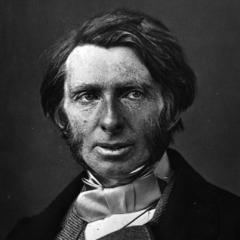
John Ruskin
John Ruskin

John Ruskin was an influential British art critic, writer, and social critic. Known for his profound insights into art, architecture, and social issues, he had a significant impact on the aesthetics and culture of the Victorian era. more

You May Also Like

“All are to be men of genius in their degree,--rivulets or rivers, it does not matter, so that the souls be clear and pure; not dead walls encompassing dead heaps of things, known and numbered, but running waters in the sweet wilderness of things unnumbered and unknown, conscious only of the living banks, on which they partly refresh and partly reflect the flowers, and so pass on.”

“The whole difference between a man of genius and other men, it has been said a thousand times, and most truly, is that the first remains in great part a child, seeing with the large eyes of children, in perpetual wonder, not conscious of much knowledge--conscious, rather of infinite ignorance, and yet infinite power; a fountain of eternal admiration, delight, and creative force within him meeting the ocean of visible and governable things around him.”

“A gentleman's first characteristic is that fineness of structure in the body which renders it capable of the most delicate sensation; and of structure in the mind which renders it capable of the most delicate sympathies; one may say simply "fineness of nature.”

“I believe that there is no test of greatness in periods, nations or men more sure than the development, among them or in them, of a noble grotesque, and no test of comparative smallness or limitation, of one kind or another, more sure than the absence of grotesque invention, or incapability of understanding it.”