Quotessence
Home / Quotes / Quote by Ed Crane

Quote by Ed Crane

“[T]here are, at bottom, basically two ways to order social affairs, Coercively, through the mechanisms of the state - what we can call political society. And voluntarily, through the private interaction of individuals and associations - what we can call civil society. ... In a civil society, you make the decision. In a political society, someone else does. ... Civil society is based on reason, eloquence, and persuasion, which is to say voluntarism. Political society, on the other hand, is based on force.”

Quote by Ed Crane

Author
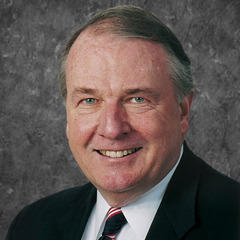
Ed Crane
Ed Crane

Ed Crane, born on August 15, 1944, is an outstanding political activist. He has extensive experience and profound insights in the political field, dedicated to promoting social change and democratic development. more

You May Also Like

“There is no crime more infamous than the violation of truth. It is apparent that men can be social beings no longer than they believe each other. When speech is employed only as the vehicle of falsehood, every man must disunite himself from others, inhabit his own cave and seek prey only for himself.”

“Let me offer you, metaphorically, two magic wands that have sweeping powers to change society. With one wand you could wipe out all racism and discrimination from the hearts and minds of white America. The other wand you could wave across the ghettoes and barrios of America and infuse the inhabitants with Japanese or Jewish values, respect for learning, and ambition. ... I suggest that the best wand for society and for those who live in the ghettoes and barrios would be the second wand.”

“The class of citizens who provide at once their own food and their own raiment, may be viewed as the most truly independent and happy. They are more: they are the best basis of public liberty, and the strongest bulwark of public safety. It follows, that the greater the proportion of this class to the whole society, the more free, the more independent, and the more happy must be the society itself.”