Quotessence
Home / Quotes / Quote by E. M. Forster

Quote by E. M. Forster

Work

A Passage to India

E.M. Forster's classic novel takes readers on a journey through the Indian subcontinent, depicting the complex interactions between British colonizers and Indian locals. The story delves into the intricacies of cultural differences and the impact of colonial rule, offering a nuanced perspective on the human condition. more
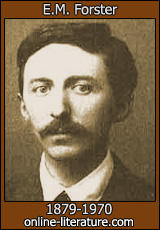
Author

E. M. Forster
E. M. Forster

E. M. Forster was an English novelist known for his modernist works. His most famous novel, 'A Passage to India', delves into themes of colonialism and the intricacies of human relationships. Forster's writing is renowned for its wit, irony, and philosophical depth. more

You May Also Like

“Miss Wynter, I think you should be the evil queen,” Harriet said. “There’s an evil queen?” Daniel echoed. With obvious delight. “Of course,” Harriet replied. “Every good play has an evil queen.” Frances actually raised her hand. “And a un—” “Don’t say it,” Elizabeth growled. Frances crossed her eyes, put her knife to her forehead in an approximation of a horn, and neighed.”

“What about me?” Frances asked. “The butler,” Harriet replied without even a second of hesitation. Frances’s mouth immediately opened to protest. “No, no,” Harriet said. “It’s the best role, I promise. You get to do everything.” “Except be a unicorn,” Daniel murmured. Frances tilted her head to the side with a resigned expression. “The next play,” Harriet finally gave in. “I shall find a way to include a unicorn in the one I’m working on right now.” Frances pumped both fists in the air. “Huzzah!”

“Have you seen Frances?” He tilted his head to the right. “I believe she’s off rooting about in the bushes.” Anne followed his gaze uneasily. “Rooting?” “She told me she was practicing for the next play.” Anne blinked at him, not following. “For when she gets to be a unicorn.” “Oh, of course.” She chuckled. “She is rather tenacious, that one.”

“I like women who haven’t lived with too many men. I don’t expect virginity but I simply prefer women who haven’t been rubbed raw by experience. There is a quality about women who choose men sparingly; it appears in their walk in their eyes in their laughter and in their gentle hearts. Women who have had too many men seem to choose the next one out of revenge rather than with feeling. When you play the field selfishly everything works against you: one can’t insist on love or demand affection. You’re finally left with whatever you have been willing to give which often is: nothing.”