Quotessence
Home / Quotes / Quote by Melissa Febos

Quote by Melissa Febos

“Being a dominatrix, sticking my foot up people's asses for money, necessitated that I divorce myself from any sort of objective perspective on what I was doing. In order to think about things as a writer you have to objectify your experience. I couldn't have been enacting that experience if I was objectifying it.”

Quote by Melissa Febos

Author
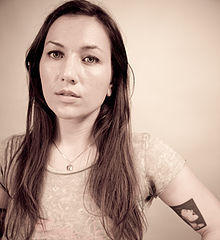
Melissa Febos
Melissa Febos

Melissa Febos is a contemporary writer known for her unique narrative style and profound insights into personal experiences. Her works often explore themes such as gender, identity, and memory. more

You May Also Like

“I was in the fantasy. I was selling myself on the fantasy as I was doing it. It never occurred to me. I did take notes, but just because I am a writer. I've been a writer since I was five. You don't have any sort of outlandish, shocking, extraordinary, horrifying experience without writing it down, because I know and knew that you forget things. No matter how outrageous and amazing and extraordinary and seemingly unforgettable an experience is, it's kind of like a dream. It will erode inevitably, for me.”

“I saved letters from my boss. There are things in there that are directly transcribed. I was so glad I did that. Sometimes when I was writing the book I wondered if some little writer hobbit part of my brain was back there puppeteering that action. But it really never, on any conscious level, occurred to me that I would write about it. I will say, I thought probably some day there would be an ancillary character in some novel - not in the one I was currently writing - that would be a dominatrix or something.”

“Me writing the book and the subsequent interactions that we had were actually the cap on that experience. We were still in this weird purgatory about it when I published the book. When I gave them the galleys and what ensued after that, then I understood a lot more about our relationships and what the experience meant to them. I'd never wanted to know what they thought about it at all.”

“I think that more so, my wonderful skill of dissociation came in very handy. I care very much what other people think. I'm a total pleaser. I want everyone to like me all the time. I feel like people who don't feel that way on some level are lying, but particularly female memoirists. We want to be seen and we want to be forgiven. So that occurred to me very early on.”

“I didn't know enough as a writer to understand why I needed to do this, but I understood in a very gut way that I could not entertain those thoughts of pleasing people and write this book - that it would be a very different book. Without really sort of investigating that instinct, which I'm glad for, I just made a conscious decision to put blinders on and not think about anything and put it all in. And I did. I put everything in. I had to look at the whole picture to see what I needed.”

“I couldn't have articulated this process at the time; I just sort of did it instinctually. But now when I talk about this with my students all the time, it's one of the first things I address in memoir classes - that you have to put it all in because you're writing your way into the ending of your own story. Even if you think you know what the story is, you don't until you write it. If you start leaving things out you could leave out vital organs and not know it.”

“I think the addiction stuff, because I was already sort of outed in my family as a sexual person: as a sexually-adventurous and sexually-conflicted person and sexually-driven person. They already knew that about me. They knew that about me when I was eleven. My parents very consciously tried to provide an environment that would protect me from becoming a drug addict.”