“Is enjoyment the goal of life? Were it so, it would be a tremendous mistake to become a man at all. What man can enjoy a meal with more gusto than the dog or the cat ? Go to a menagerie and see the [wild animals] tearing the flesh from the bone. Go back and become a bird! . . . What a mistake then to become a man! Vain have been my years - hundreds of years - of struggle only to become the man of sense-enjoyments.”
Quote by Swami Vivekananda
Work
The Complete Works of Swami Vivekananda
This book includes a wide range of Swami Vivekananda's teachings on spirituality, philosophy, and social issues, offering insights into his thoughts on various aspects of life and the human condition. more
Author
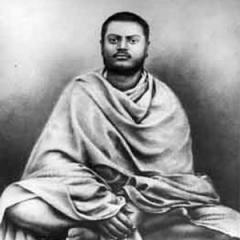
Swami Vivekananda
Swami Vivekananda (January 12, 1863 – July 4, 1902) was an Indian Hindu monk, philosopher, and social reformer. Born as Narendranath Datta in Kolkata, he was a chief disciple of the mystic Ramakrishna. He is best known for his historic speech at the 1893 Parliament of the World's Religions in Chicago, where he introduced Hinduism to the Western world. He founded the Ramakrishna Mission in 1897, focusing on social service, education, and interfaith harmony. His teachings emphasized self-realization, service to humanity, and the unity of all religions. He wrote extensively on yoga and Vedanta philosophy, influencing global spirituality and Indian nationalism. He died at the age of 39, leaving a lasting legacy as a bridge between Eastern and Western thought. more
You May Also Like
Source: Complete Works
Source: Complete Works
Source: Jnana Yoga: The Yoga of Knowledge
“It is incredible how far women have come and women in sports have come.”
“Those who die, merely suffering the woes of life like cats and dogs, are they men?”
Source: Prabuddha Bharata: Or Awakened India
Source: Endymion
Source: Felix Holt, The Radical
Source: Sometimes a Great Notion
“Heroes don't get anything but dead.”
Source: The Lunatic Cafe: An Anita Blake, Vampire Hunter Novel