Quotessence
Home / Quotes / Quote by Zach Gilford

Quote by Zach Gilford

“I really have no preference between TV and film. I think that each individual project is its own thing and has a very different style. I have worked on big movies and small movies and network TV. I have had amazing experiences in each environment, and awful ones - more good than bad, though.”

Quote by Zach Gilford

Author
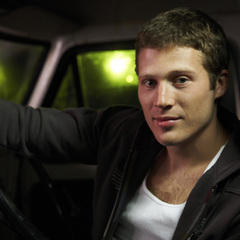
Zach Gilford
Zach Gilford

Zach Gilford is an American actor born on January 14, 1982. He gained widespread recognition for his role as Dr. George O'Malley in the television series 'Grey's Anatomy'. In addition to television, he has appeared in several films, including 'The Last Song' and 'The Spectacular Now'. more

You May Also Like

“The best directing style is the one that lets me do whatever I want. Seriously though, I like to be challenged and I like to collaborate. I love finding the medium between what I think and what a director does. I hate when a director uses the "my way or the highway" approach. But it also sucks when they tell you everything you do is great and offer no input. It's a fine line a director has to walk. It is a hard job.”

“When I work there are two distinct phases: the phase of pushing the work along, getting something to happen, where all the input comes from me, and phase two, where things start to combine in a way that wasn't expected or predicted by what I supplied. Once phase two begins everything is okay, because then the work starts to dictate its own terms. It starts to get an identity which demands certain future moves. But during the first phase you often find that you come to a full stop.”

“Frequently, I go straight into the studio and see what's around. I might hire a couple of instruments that I've never used - maybe a particular type of electronic organ or an echo unit. Then I just dabble with sounds until something starts to happen that suggests a texture. The texture suggests some kind of mood, and the mood suggests some kind of lyric. That's like working in reverse, often quite the other way around, from sound to song. Although often they stop before they get to the song stage.”

“Another way of working is setting deliberate constraints that aren't musical ones - like saying, "Well, this piece is going to be three minutes and nineteen seconds long and it's going to have changes here, here and here, and there's going to be a convolution of events here, and there's going to be a very fast rhythm here with a very slow moving part over the top of it." Those are the sort of visual ideas that I can draw out on graph paper. I've done a lot of film music this way.”

“One way of working is just bring a group of totally different musicians together and encourage them to stick to their guns, not to do the thing that normally happens in a working situation where everyone homogenizes and concedes certain points - so eventually they're all playing in roughly the same style. I wanted quite the opposite of that. I wanted them to accent their styles, so that they pulled away. So there would be a kind of space in the middle where I could operate, and attempt to make these things coalesce in some way. In fact quite a lot of my stuff has arisen from that.”

“If you think of the way a composer or say a pop arranger works - he has an idea and he writes it down, so there's one transmission loss. Then he gives the score to a group of musicians who interpret that, so there's another transmission loss. So he's involved with three information losses. Whereas what I nearly always do is work directly to the sound if it doesn't sound right. So there's a continuous loop going on.”