Quotessence
Home / Quotes / Quote by Thomas Sprat

Quote by Thomas Sprat

“They have never affirm'd any thing, concerning the cause, till the trial was past: whereas, to do it before, is a most venomous thing in the making of Sciences: for whoever has fix'd on his Cause, before he has experimented; can hardly avoid fitting his Experiment, and his Observations, to his Own Cause, which he had before imagin'd; rather than the Cause to the Truth of the Experiment itself. Referring to experiments of the Aristotelian mode, whereby a preconceived truth would be illustrated merely to convince people of the validity of the original thought.”

Quote by Thomas Sprat

Author
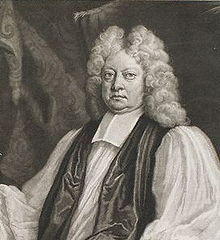
Thomas Sprat
Thomas Sprat

Thomas Sprat (1635-1713) was an English writer and historian. His career and specific category are unknown. His life details are limited. more

You May Also Like

“As historians, we refuse to allow ourselves these vain speculations which turn on possibilities that, in order to be reduced to actuality, suppose an overturning of the Universe, in which our globe, like a speck of abandoned matter, escapes our vision and is no longer an object worthy of our regard. In order to fix our vision, it is necessary to take it such as it is, to observe well all parts of it, and by indications infer from the present to the past.”

“Astronomy may be revolutionized more than any other field of science by observations from above the atmosphere. Study of the planets, the Sun, the stars, and the rarified matter in space should all be profoundly influenced by measurements from balloons, rockets, probes and satellites. ... In a new adventure of discovery no one can foretell what will be found, and it is probably safe to predict that the most important new discovery that will be made with flying telescopes will be quite unexpected and unforeseen.”

“During the last two centuries and a half, physical knowledge has been gradually made to rest upon a basis which it had not before. It has become mathematical. The question now is, not whether this or that hypothesis is better or worse to the pure thought, but whether it accords with observed phenomena in those consequences which can be shown necessarily to follow from it, if it be true”

“Error, never can be consistent, nor can truth fail of having support from the accurate examination of every circumstance.”

“Experiments in geology are far more difficult than in physics and chemistry because of the greater size of the objects, commonly outside our laboratories, up to the earth itself, and also because of the fact that the geologic time scale exceeds the human time scale by a million and more times. This difference in time allows only direct observations of the actual geologic processes, the mind having to imagine what could possibly have happened in the past.”

“For the little that one has reflected on the origin of our knowledge, it is easy to perceive that we can acquire it only by means of comparison. That which is absolutely incomparable is wholly incomprehensible. God is the only example that we could give here. He cannot be comprehended, because he cannot be compared. But all which is susceptible of comparison, everything that we can perceive by different aspects, all that we can consider relatively, can always be judged according to our knowledge.”

“For those [observations] that I made in Leipzig in my youth and up to my 21st year, I usually call childish and of doubtful value. Those that I took later until my 28th year [i.e., until 1574] I call juvenile and fairly serviceable. The third group, however, which I made at Uraniborg during approximately the last 21 years with the greatest care and with very accurate instruments at a more mature age, until I was fifty years of age, those I call the observations of my manhood, completely valid and absolutely certain, and this is my opinion of them.”