Quotessence
Home / Quotes / Quote by Augustus De Morgan

Quote by Augustus De Morgan

“During the last two centuries and a half, physical knowledge has been gradually made to rest upon a basis which it had not before. It has become mathematical. The question now is, not whether this or that hypothesis is better or worse to the pure thought, but whether it accords with observed phenomena in those consequences which can be shown necessarily to follow from it, if it be true”

Quote by Augustus De Morgan

Work

A Budget of Paradoxes Reprinted, with the Author's Additions, from the Athenaeum Augustus De Morgan

This book is a reprinted version of Augustus De Morgan's philosophical work, which includes supplementary content contributed by the author himself. The original text, originally published in the Athenaeum, has been updated with new insights and additions, providing readers with a more comprehensive understanding of De Morgan's ideas. more

Author
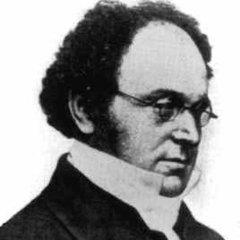
Augustus De Morgan
Augustus De Morgan

Augustus De Morgan was a distinguished British mathematician recognized for his contributions to algebra and logic. Born on June 27, 1806, and passing away on March 18, 1871, De Morgan's work laid the groundwork for modern symbolic logic and he is also renowned for his research in number theory and mathematical analysis. more

You May Also Like

“Error, never can be consistent, nor can truth fail of having support from the accurate examination of every circumstance.”

“Experiments in geology are far more difficult than in physics and chemistry because of the greater size of the objects, commonly outside our laboratories, up to the earth itself, and also because of the fact that the geologic time scale exceeds the human time scale by a million and more times. This difference in time allows only direct observations of the actual geologic processes, the mind having to imagine what could possibly have happened in the past.”

“For the little that one has reflected on the origin of our knowledge, it is easy to perceive that we can acquire it only by means of comparison. That which is absolutely incomparable is wholly incomprehensible. God is the only example that we could give here. He cannot be comprehended, because he cannot be compared. But all which is susceptible of comparison, everything that we can perceive by different aspects, all that we can consider relatively, can always be judged according to our knowledge.”

“For those [observations] that I made in Leipzig in my youth and up to my 21st year, I usually call childish and of doubtful value. Those that I took later until my 28th year [i.e., until 1574] I call juvenile and fairly serviceable. The third group, however, which I made at Uraniborg during approximately the last 21 years with the greatest care and with very accurate instruments at a more mature age, until I was fifty years of age, those I call the observations of my manhood, completely valid and absolutely certain, and this is my opinion of them.”

“Geological facts being of an historical nature, all attempts to deduce a complete knowledge of them merely from their still, subsisting consequences, to the exclusion of unexceptionable testimony, must be deemed as absurd as that of deducing the history of ancient Rome solely from the medals or other monuments of antiquity it still exhibits, or the scattered ruins of its empire, to the exclusion of a Livy, a Sallust, or a Tacitus.”

“Geology is part of that remarkable dynamic process of the human mind which is generally called science and to which man is driven by an inquisitive urge. By noticing relationships in the results of his observations, he attempts to order and to explain the infinite variety of phenomena that at first sight may appear to be chaotic.”