Quotessence
Home / Quotes / Quote by Luis Fortuno

Quote by Luis Fortuno

“I came into office to do what was correct, not to see what was politically expedient to get re-elected.”

Quote by Luis Fortuno

Author
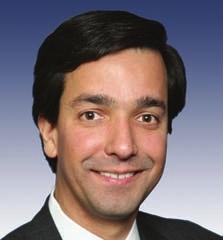
Luis Fortuno
Luis Fortuno

Luis Fortuño, born on October 31, 1960, is a former Governor of Puerto Rico. He has extensive political experience and was known for his efforts to promote political, economic, and social reforms in Puerto Rico during his tenure as Governor. more

You May Also Like

“Behind it was that vast suspension bridge which always troubles me because it reminds me that in this mechanized age I am as little able to understand my environment as any primitive woman who thinks that a waterfall is inhabited by a spirit, and indeed less so, for her opinion might from a poetical point of view be correct.”

“A monumental decision such as starting a family requires persuasive dissertations, licences, spreadsheets and field research. That's what I assumed until one night when we were lying in bed and, if I recall correctly, I asked Tracy if we were ready to have a family now, and she said sure. That was it.”

“He needs to be corrected, if you don't mind me saying so. He needs a good talking-to, and perhaps a bit more. My own girls, sir, didn't care for the Overlook at first. One of them actually stole a pack of my matches and tried to burn it down. I corrected them. I corrected them most harshly. And when my wife tried to stop me from doing my duty, I corrected her.”

“What we take ourselves to be doing when we think about what is the case or how we should act is something that cannot be reconciled with a reductive naturalism, for reasons distinct from those that entail the irreducibility of consciousness. It is not merely the subjectivity of thought but its capacity to transcend subjectivity and to discover what is objectively the case that presents a problem....Thought and reasoning are correct or incorrect in virtue of something independent of the thinker's beliefs, and even independent of the community of thinkers to which he belongs. (p. 71)”

“Jephthah called together the men of Gilead and fought against Ephraim. The Gileadites captured the fords of the Jordan leading to Ephraim, and whenever a survivor of Ephraim said, 'Let me cross over,' the men of Gilead asked him, 'Are you an Ephraimite?' If he replied, 'No,' they said, 'All right, say Shibboleth.' If he said, 'Sibboleth,' because he could not pronounce the word correctly, they seized and killed him at the fords of the Jordan. Fourty-thousand were killed at the time.”