Quotessence
Home / Quotes / Quote by Ludwig van Beethoven

Quote by Ludwig van Beethoven

Author

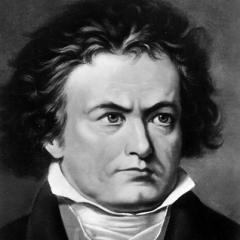
Ludwig van Beethoven

Ludwig van Beethoven, born in Bonn, Germany in 1770, was an outstanding composer whose works had a profound impact on classical and romantic music, regarded as one of the greatest composers in the history of music. more

You May Also Like

“In times past there were rituals of passage that conducted a boy into manhood, where other men passed along the wisdom and responsibilities that needed to be shared. But today we have no rituals. We are not conducted into manhood; we simply find ourselves there.”

“Like children, the elders are a burden. But unlike children, they offer no hope or promise. They are a weight and an encumbrance and a mirror of our own mortality. It takes a person of great heart to see past this fact and to see the wisdom the elders have to offer, and so serve them out of gratitude for the life they have passed on to us.”

“It is the same for all men. None of us can escape this shadow of the father, even if that shadow fills us with fear, even if it has no name or face. To be worthy of that man, to prove something to that man, to exorcise the memory of that man from every corner of our life--however it affects us, the shadow of that man cannot be denied.”

“I want you to consider this distinction as you go forward in life. Being male is not enough; being a man is a right to be earned and an honor to be cherished. I cannot tell you how to earn that right or deserve that honor. . . but I can tell you that the formation of your manhood must be a conscious act governed by the highest vision of the man you want to be.”

“I am firmly of the opinion that the Macintosh is Catholic and that DOS is Protestant. Indeed, the Macintosh is counterreformist and has been influenced by the methodical path of the Jesuits.... It is catechistic: the essence of revelation is dealt with via simple formulae and sumptuous icons. Everyone has a right to salvation. DOS is Protestant, or even Calvinistic. It allows free interpretation of scripture, demands difficult personal decisions, imposes a subtle hermeneutics upon the user, and takes for granted the idea that all can reach salvation.”