Quotessence
Home / Quotes / Quote by Laozi

Quote by Laozi

“The best soldiers are not warlike; the best fighters do not lose their temper. The greatest conquerors are those who overcome their enemies without strife. The greatest directors of men are those who yield place to others. This is called the Virtue of not striving, the capacity for directing mankind; this is being the compeer of Heaven. It was the highest goal of the ancients.”

Quote by Laozi

Author
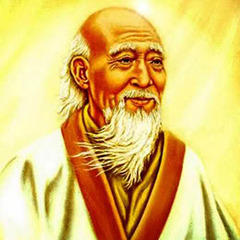
Laozi
Laozi

Laozi, also known as Lao Dan, was a renowned ancient Chinese philosopher and the founder of the Taoist school of thought. His birth and death dates are approximately 604 BC to 531 BC. Laozi advocated for顺应自然 (yielding to nature) and the principle of non-action (wu wei), which had a profound impact on Chinese philosophy, culture, and politics. more

You May Also Like

“What most of us need, almost more than anything, is the courage and humility really to ask for help, from the depths of our hearts: to ask for the compassion of the enlightened beings, to ask for purification and healing, to ask for the power to understand the meaning of our suffering and transform it; at a relative level to ask for the growth in our lives of clarity, peace, and discernment, and to ask for the realization of the absolute nature of mind that comes from merging with the deathless wisdom mind of the master.”

“I make a distinction between Buddhism with a Capital 'B' and buddhism with a small 'b'. Sri Lanka has the former, in which the state uses Buddhism as an instrument of power, so there are even Buddhists monks who say the Tamils should be eliminated. Thai Buddhists are not perfect either. Some Thai Buddhist monks have compromised with the kind and possess cars and other luxuries. In many Buddhist countries, the emphasis is on being goody-goody, which is not good enough. I am for buddhism with a small 'b' which is non-violent, practical and aims to eliminate the cause of suffering.”

“An authentically empowered person is humble. This does not mean the false humility of one who stoops to be with those who are below him or her. It is the inclusiveness of one who responds to the beauty of each soul. ... It is the harmlessness of one who treasures, honours and reveres life in all its forms.”

“Nothing is more humbling than to look with a strong magnifying glass at an insect so tiny that the naked eye sees only the barest speck and to discover that nevertheless it is sculpted and articulated and striped with the same care and imagination.”