Quotessence
Home / Quotes / Quote by Lewis Carroll

Quote by Lewis Carroll

Work

Alice in Wonderland & Through the Looking Glass

This collection includes 'Alice's Adventures in Wonderland' and 'Through the Looking-Glass, and What Alice Found There,' both written by Lewis Carroll. The books are known for their imaginative narrative, playful language, and unique illustrations, captivating readers with their whimsical and dreamlike quality. more

Author
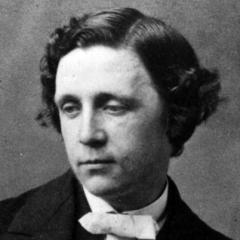
Lewis Carroll
Lewis Carroll

Lewis Carroll, born Charles Lutwidge Dodgson, was an English writer, mathematician, logician, photographer, and children's author. He is best known for his novel Alice's Adventures in Wonderland, which is celebrated for its unique imagination, rich symbolism, and humor. more

You May Also Like

“Chess teaches foresight, by having to plan ahead; vigilance, by having to keep watch over the whole chess board; caution, by having to restrain ourselves from making hasty moves; and finally, we learn from chess the greatest maxim in life - that even when everything seems to be going badly for us we should not lose heart, but always hoping for a change for the better, steadfastly continue searching for the solutions to our problems.”

“Feelings dwell in man; but man dwells in his love. That is no metaphor, but the actual truth. Love does not cling to the I in such a way as to have the Thou only for its " content," its object; but love is between I and Thou. The man who does not know this, with his very being know this, does not know love; even though he ascribes to it the feelings he lives through, experiences, enjoys, and expresses.”

“And if you would know God, be not therefore a solver of riddles. Rather look about you and you shall see Him playing with your children. And look into space; you shall see Him walking in the cloud, outstretching His arms in the lightning and descending in rain. You shall see Him smiling in flowers, then rising and waving His hands in trees.”

“How can we satisfy ourselves without going on in infinitum? And, after all, what satisfaction is there in that infinite progression? Let us remember the story of the Indian philosopher and his elephant. It was never more applicable than to the present subject. If the material world rests upon a similar ideal world, this ideal world must rest upon some other; and so on, without end. It were better, therefore, never to look beyond the present material world.”