Quotessence
Home / Quotes / Quote by H. G. Wells

Quote by H. G. Wells

Work

Delphi Complete Works of H. G. Wells

This volume encompasses a wide range of H. G. Wells' literary output, showcasing his contributions to science fiction, social commentary, and historical fiction. It includes classic titles such as 'The Time Machine,' 'The War of the Worlds,' and 'The Invisible Man,' as well as lesser-known works that reflect his diverse interests and imaginative prowess. more

Author
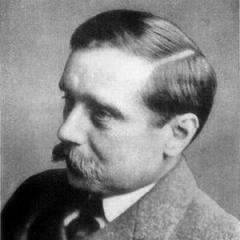
H. G. Wells
H. G. Wells

H.G. Wells was a prominent English writer known for his science fiction, history, and social commentary. His most famous works include 'The Time Machine,' 'The War of the Worlds,' and 'The Invisible Man.' Born on September 21, 1866, in Bromley, Kent, England, Wells passed away on August 13, 1946. more

You May Also Like

“Against the vast majority of my countrymen, even at this moment, in the name of humanity and civilization, I protest against our share in the destruction of Germany. A month ago Europe was a peaceful comity of nations; if an Englishman killed a German, he was hanged. Now, if an Englishman kills a German, or if a German kills an Englishman, he is a patriot, who has deserved well of his country.”

“In the account book of the Great War the page recording the Russian losses has been ripped out. The figures are unknown. Five millions, or eight? We ourselves know not. All we know is that, at times, fighting the Russians, we had to remove the piles of enemy bodies from before our trenches, so as to get a clear field of fire against new waves of assault.”

“We once discussed which were the cleanest troops in the trenches, taken by nationalities. We agreed on a descending-order like this: English and German Protestants; Northern Irish, Welsh and Canadians; Irish and German Catholics; Scots; Mohammedan Indians; Algerians; Portugese; Belgians; French. We put the Belgians and French there for spite; they could not have been dirtier than the Algerians and the Portugese.”

“I was called up in the war and sent to a hospital. I dressed wounds, applied iodine, gave enemas, did blood transfusions. If the doctor ordered: "Brecht, amputate a leg!", I would reply, "Certainly, Your Excellency!", and cut off the leg. If I was told, "Perform a trepanning!" I opened the man's skull and messed about with his brains. I saw how they patched fellows up, so as to cart them back to the Front as quickly as they could.”

“The gas-cylinders had by this time been put into position on the front line. A special order came round imposing severe penalties on anyone who used any word but "accessory" in speaking of the gas. This was to keep it secret, but the French civilians knew all about the scheme long before this.”

“In any case, the bayonet isn't as important as it used to be. It's more usual now to go into the attack with hand-grenades and your entrenching tool. The sharpened spade is a lighter and more versatile weapon - not only can you get a man under the chin, but more to the point, you can strike a blow with a lot more force behind it. That's especially true if you can bring it down diagonally between the neck and the shoulder, because then you can split down as far as the chest. When you put a bayonet in, it can stick, and you have to give the other man a hefty kick in the guts to get it out.”