Quotessence
Home / Quotes / Quote by D. H. Lawrence

Quote by D. H. Lawrence

Author

D. H. Lawrence
D. H. Lawrence

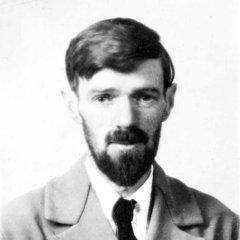
D. H. Lawrence was an English novelist and poet, born on September 11, 1885, and died on March 2, 1930. He is recognized for his distinctive prose style and his exploration of complex human relationships, particularly in the context of modernity and industrialization. His works often deal with themes of love, sex, and the struggle for individuality. more

You May Also Like

“I really rate Paul Scholes, because he hasn't got the high profile of many of the Manchester United players, he doesn't get too much attention, but he is one very good player. He is an intelligent player, he works hard and he scores some great goals. He is not flamboyant and is a quiet lad off the pitch but he is a tremendous asset to Manchester United and to England. He has already got my vote as player of the year.”

“The whole realm of thought and opinion is utterly unsuited to public control; it ought to be as free, and as spontaneous as is possible. The state is justified in insisting that children shall be educated, but it is not justified in forcing their education to proceed on a uniform plan and to be directed to the production of a dead level of glib uniformity.”

“Education, and the life of the mind generally, is a matter in which individual initiative is the chief thing needed; the function of the state should begin and end with insistence on some kind of education, and, if possible, a kind which promotes mental individualism, not a kind which happens to conform to the prejudices of government officials.”

“Science tells us what we can know but what we can know is little and if we forget how much we cannot know we become insensitive of many things of very great importance. Theology, on the other hand induces a dogmatic belief that we have knowledge where in fact we have ignorance and by doing so generates a kind of impertinent insolence towards the universe. Uncertainty in the presence of vivid hopes and fears is painful, but must be endured if we wish to live without the support of comforting fairy tales.”