“The greatest commander is he whose intuitions most nearly happen.”
Quote by T. E. Lawrence
Work
Lawrence of Arabia: The Man Behind the Myth (Complete Autobiographical Works, Memoirs & Letters): Seven Pillars of Wisdom (Memoirs of the Arab Revolt) + The Evolution of a Revolt + The Mint (Memoirs of the secret service in Royal Air Force) + Collected Letters (1915-1935)
This collection brings together the extensive writings of T.E. Lawrence, covering his experiences during the Arab Revolt, his service in the Royal Air Force, and his personal correspondence. It includes 'Seven Pillars of Wisdom,' a detailed account of his role in the Arab Revolt, 'The Evolution of a Revolt,' which delves into the historical context, 'The Mint,' which chronicles his secret service activities, and 'Collected Letters,' offering a glimpse into his personal life and thoughts. more
Author
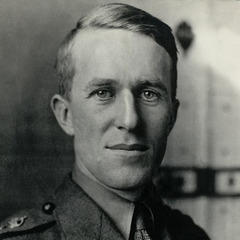
T. E. Lawrence
Thomas Edward Lawrence (August 16, 1888 – May 19, 1935), known as T. E. Lawrence or Lawrence of Arabia, was a British military officer, archaeologist, and writer. He gained fame for his role in leading the Arab Revolt against the Ottoman Empire during World War I. Born in Wales and educated at Oxford University, he initially worked on archaeological excavations in the Middle East. During the war, he served as a British liaison officer, employing guerrilla tactics to capture Aqaba and Damascus. After the war, he advocated for Arab independence at the Paris Peace Conference but failed. He later enlisted in the Royal Air Force under pseudonyms. His memoir, Seven Pillars of Wisdom, became a classic. Lawrence's life inspired numerous films and books, cementing his legacy as a legendary figure. more
You May Also Like
“There is not a truth existing which I fear... or would wish unknown to the whole world.”
Source: The Works of Thomas Jefferson: Correspondence and Papers, 1816-1826
Source: On War: Vom Kriege: fog of war
“It is in disaster, not success, that the heros and the bums really get sorted out.”
“We should never fear to negotiate, nor negotiate from fear.”
“Conquest is not in our principles. It is inconsistent with our government.”