Quotessence
Home / Quotes / Quote by Blaise Pascal

Quote by Blaise Pascal

“[Christianity] endeavors equally to establish these two things: that God has set up in the Church visible signs to make himself known to those who should seek him sincerely, and that he has nevertheless so disguised them that he will only be perceived by those who seek him with all their heart.”

Quote by Blaise Pascal

Author
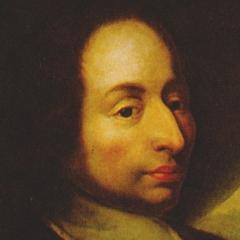
Blaise Pascal
Blaise Pascal

Blaise Pascal was a French mathematician, physicist, philosopher, and theologian. He was born on June 19, 1623, and died on August 19, 1662. Pascal's contributions to mathematics were particularly significant, with groundbreaking work in probability theory, analytical geometry, and early calculus. more

You May Also Like

“Our senses perceive no extreme. Too much sound deafens us; too much light dazzles us; too great distance or proximity hinders ourview. Too great length and too great brevity of discourse tends to obscurity; too much truth is paralyzing.... In short, extremes are for us as though they were not, and we are not within their notice. They escape us, or we them.”

“Vanity is so anchored in the heart of man that a soldier, a soldier's servant, a cook, a porter brags and wishes to have his admirers. Even philosophers wish for them. Those who write against vanity want to have the glory of having written well; and those who read it desire the glory of having read it. I who write this have perhaps this desire, and perhaps those who will read it.”

“Let us, then, take our compass; we are something, and we are not everything. The nature of our existence hides from us the knowledge of first beginnings which are born of the nothing; and the littleness of our being conceals from us the sight of the infinite. Our intellect holds the same position in the world of thought as our body occupies in the expanse of nature.”

“Knowledge has two extremes. The first is the pure natural ignorance in which all men find themselves at birth. The other extreme is that reached by great minds, who, having run through all that men can know, find they know nothing, and come back again to that same natural ignorance from which they set out; this is a learned ignorance which is conscious of itself.”

“What matters it that man should have a little more knowledge of the universe? If he has it, he gets little higher. Is he not always infinitely removed from the end, and is not the duration of our life equally removed from eternity, even if it lasts ten years longer?”