“The most important characteristic of an organism is that capacity for internal self-renewal known as health. There are two organisms whose processes of self-renewal have been subjected to human interference and control. One of these is man himself (medicine and public health). The other is land (agriculture and coservation). The effort to control the health of land has not been very successful.”
Quote by Aldo Leopold
Work
Aldo Leopold: A Sand County Almanac & Other Writings on Conservation and Ecology: (Library of America #238)
Aldo Leopold's 'A Sand County Almanac' is a seminal work in the field of conservation and ecology, offering insights into the natural world and the human relationship with it. This collection also includes Leopold's other writings, providing a comprehensive view of his thoughts on environmental stewardship and the importance of preserving natural habitats. more
Author
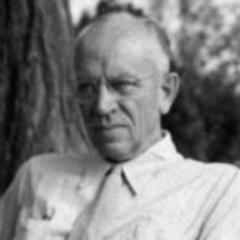
Aldo Leopold
Aldo Leopold was an American author, philosopher, conservationist, and environmentalist. He is best known for his book 'A Sand County Almanac', which is considered a foundational text in environmental ethics and wildlife management. Leopold was born on January 11, 1887, and passed away on April 21, 1948. more
You May Also Like
Source: Modernity and Self-identity: Self and Society in the Late Modern Age
“The risk climate of modernity is thus unsettling for everyone: no one escapes.”
Source: Modernity and Self-identity: Self and Society in the Late Modern Age
Source: Modernity and Self-identity: Self and Society in the Late Modern Age
Source: Modernity and Self-identity: Self and Society in the Late Modern Age