Quotessence
Home / Quotes / Quote by Anthony Giddens

Quote by Anthony Giddens

Work

Modernity and Self-identity: Self and Society in the Late Modern Age

This book delves into the complexities of self-identity as it intersects with societal changes in the late modern era, examining how individuals navigate personal identity in a rapidly evolving social landscape. more

Author
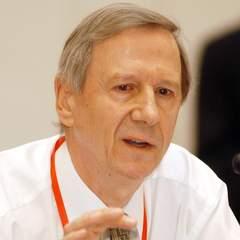
Anthony Giddens
Anthony Giddens

Anthony Giddens is a British sociologist and political theorist, born on January 18, 1938. He is one of the most influential sociologists of the late 20th and early 21st centuries, known for his work on structuration theory and the study of modernity. more

You May Also Like

“[C]ultivated risk-taking represents an 'experiment with trust' (in the sense of basic trust) which consequently has implications for an individual's self-identity. (...) In cultivated risk-taking, the encounter with danger and its resolution are bound up in the same activity, whereas in other consequential settings the payoff of chosen strategies may not be seen for years afterwards.”

“Thinking in terms of risk certainly has its unsettling aspects (...), but it is also a means of seeking to stabilise outcomes, a mode of colonising the future. The more or less constant, profound and rapid momentum of change characteristic of modern institutions, coupled with structured reflexivity, mean that on the level of everyday practice as well as philosophical [Seitenwechsel] interpretation, nothing can be taken for granted. What is acceptable/appropriate/recommended behaviour today may be seen differently tomorrow in the light of altered circumstances or incoming knowledge-claims.”

“Abstract systems depend on trust, yet they provide none of the moral rewards which can be obtained from personalised trust, or were often available in traditional settings from the moral frameworks within which everyday life was undertaken. Moreover, the wholesale penetration of abstract systems into daily life creates risks which the individual is not well placed to confront; high-consequence risks fall into this category. Greater interdependence, up to and including globally independent systems, means greater vulnerability when untoward events occur that affect those systems as a whole.”

“Just as a moral distinction is drawn between "those at risk" and "those posing a risk", health education routinely draws a distinction between the harm caused by external causes out of the individual's control and that caused by oneself. Lifestyle risk discourse overturns the notion that health hazards in postindustrial society are out of the individual's control. On the contrary, the dominant theme of lifestyle risk discourse is the responsibility of the individual to avoid health risks for the sake of his or her own health as well as the greater good of society.”