Quotessence
Home / Quotes / Quote by Anthony Giddens

Quote by Anthony Giddens

Work

Modernity and Self-identity: Self and Society in the Late Modern Age

This book delves into the complexities of self-identity as it intersects with societal changes in the late modern era, examining how individuals navigate personal identity in a rapidly evolving social landscape. more

Author
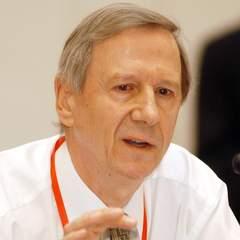
Anthony Giddens
Anthony Giddens

Anthony Giddens is a British sociologist and political theorist, born on January 18, 1938. He is one of the most influential sociologists of the late 20th and early 21st centuries, known for his work on structuration theory and the study of modernity. more

You May Also Like

“Just as a moral distinction is drawn between "those at risk" and "those posing a risk", health education routinely draws a distinction between the harm caused by external causes out of the individual's control and that caused by oneself. Lifestyle risk discourse overturns the notion that health hazards in postindustrial society are out of the individual's control. On the contrary, the dominant theme of lifestyle risk discourse is the responsibility of the individual to avoid health risks for the sake of his or her own health as well as the greater good of society.”

“Health education emphasizing risks is a form of pedagogy, which, like other forms, serves to legitimize ideologies and social practices. Risk discourse in the public health sphere allows the state, as the owner of knowledge, to exert power of the bodies of its citizens. Risk discourse, therefore, especially when it emphasizes lifestyle risks, serves as an effective Foucauldian agent of surveillance and control that is difficult to challenge because of its manifest benevolent goal of maintaining standards of health. In doing so, it draws attention away from the structural causes of ill-health.”

“No longer is the body a temple to be worshipped as the house of God; it has become a commodified and regulated object that must be strictly monitored by its owner to prevent lapses into health-threatening behaviors as identified by risk discourse. For those with the socioeconomic resources to indulge in risk modification, this discourse may supply the advantages of a new religion; for others, this discourse has the potential to create anxiety and guilt, to promote hopelessness and fear of the future.”