Quotessence
Home / Quotes / Quote by Margaret Mitchell

Quote by Margaret Mitchell

“Jeems was their body servant and, like the dogs, accompanied them everywhere. He had been their childhood playmate and had been given to the twins for their own on their tenth birthday.”

Quote by Margaret Mitchell

Work

Gone with the wind

Margaret Mitchell's 'Gone with the Wind' is a sweeping historical romance that follows the adventures of Scarlett O'Hara, a headstrong and ambitious woman living in the American South. The story spans the tumultuous years of the Civil War and the subsequent Reconstruction era, capturing the social and political changes that reshape the lives of its characters. Known for its vivid portrayal of the antebellum South and its characters, the novel has become a staple of American literature. more
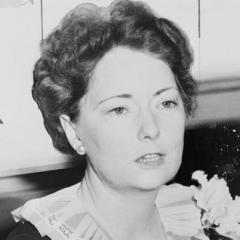
Author

Margaret Mitchell
Margaret Mitchell

Margaret Mitchell, an American author born on November 8, 1900, and died on August 16, 1949, is best known for her novel 'Gone with the Wind'. This historical novel, set against the backdrop of the American Civil War and Reconstruction, has won the hearts of readers worldwide. more

You May Also Like

“The mythology serves purposes darker than sentiment, nothing more so than the currently popular, and arrantly nonsensical, assertion that Lee freed his inherited slaves in 1862 before the war was over, while Grant kept his until the Thirteenth Amendment freed them in 1865. The subtext is transparent. If Southerner Lee freed his slaves while Northerner Grant kept his, then secession and the war that followed can hardly have had anything to do with slavery and must instead have been over the tariff or state rights, or some other handy pretext invented to cloak slavery’s pivotal role.”

“You know that there are no black people in Africa,” she said. Most Americans, we have to sit with that statement. It sounds nonsensical to our ears. Of course there are black people in Africa. There is a whole continent of black people in Africa. How could anyone not see that? “Africans are not black,” she said. “They are Igbo and Yoruba, Ewe, Akan, Ndebele. They are not black. They are just themselves. They are humans on the land. That is how they see themselves, and that is who they are.” What we take as gospel in American culture is alien to them, she said. “They don’t become black until they go to America or come to the U.K.,” she said. “It is then that they become black.”

“One cannot escape the question by hand-waving at the past, disavowing the acts of one's ancestors, nor by citing a recent date of ancestral immigration. The last slave holder has been dead for a very long time. The last soldier to endure Valley Forge has been dead much longer. To proudly claim the veteran and disown the slave holder is patriotism á la carte.”

“Here in the United States, very little effort has been made to voice formal apologies, make reparations, or pass political mandates about education. Yet this country was founded in part by genocidal policies directed at Native Americans and the enslavement of Black people. Both of these things are morally repugnant. Still I love my country. In fact, it is because I love my country that I want to make sure the mistakes of our past do not get repeated. We cannot afford to cover over the dark chapters of our history, as we have for decades upon decades. It is time for that to stop.”

“Slavery was more or less brought to an end in America, although not as quickly or apologetically as it should have been, and even after slavery ended, the descendants of slaves have been treated very terribly by many people in places with much hatred and violence, which, like slavery, may someday come to an end, although not as quickly or apologetically as any decent person would like.”

“The ship was bound for the Carolinas; and you must not suppose that I was going to that place merely as an exile. The trade was even then much depressed; since that, and with the rebellion of the colonies and the formation of the United States, it has, of course, come to an end; but in those days of my youth, white men were still sold into slavery on the plantations, and that was the destiny to which my wicked uncle had condemned me.”