Quotessence
Home / Quotes / Quote by George Elliott Clarke

Quote by George Elliott Clarke

“A rural Venus, Selah rises from the gold foliage of the Sixhiboux River, sweeps petals of water from her skin. At once, clouds begin to sob for such beauty. Clothing drops like leaves. "No one makes poetry,my Mme. Butterfly, my Carmen, in Whylah,” I whisper. She smiles: “We’ll shape it with our souls.” Desire illuminates the dark manuscript of our skin with beetles and butterflies. After the lightning and rain has ceased, after the lightning and rain of lovemaking has ceased, Selah will dive again into the sunflower-open river.”

Quote by George Elliott Clarke

Work

Whylah Falls

Browse quotes and source details for this work. more

Author

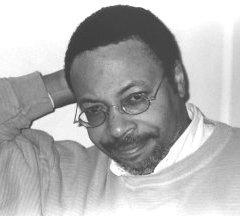
George Elliott Clarke

George Elliott Clarke is a renowned Canadian poet, born on February 12, 1960. His works are known for their profound social commentary and rich cultural background, covering themes such as race, identity, and Canadian history. more

You May Also Like

“Though we came from our native Hawaiian mother, Chad and I were perceived and therefore raised as black, which widely cast us as outsiders, nonlocals - and being seen as local in Hawaii was currency. When we first returned to Oahu, we spoke with a Texas twang that also got us teased. Chad has strong emotions surrounding those first few months; he was traumatized by his apparent blackness, which was a nonevent in Dallas and Oakland, where we were among many black kids. In Hawaii, we were some of the few mixed black kids around. And both our parents taught us that because the world would perceive us as black, we were black.”

“When we talked about "A Modest Proposal" I felt like I was running circles around everybody. I understood that shit better than the professor 'cause he was just a fan. I wasn't an Irishman, but I knew how it felt to have someone standing over you, controlling your life and wanting to call it something else. From the people at the Christian Fellowship to First Academy to my parents to Confucius to thousands of years of ass-backwards Chinese thinking, I knew how it felt. Everything my parents did to me and their parents did to them was justified under the banner of Tradition, Family, and Culture. And when it wasn't them it was someone impressing Christianity onto me and when it wasn't Christianity it was whiteness.”

“What's so great about being seen?" Tara demanded. "What's so important about that?" She might have had the words for it, but I didn't. They locked up in my throat, about being invisible, about being alien and foreign and strange even in the place where I was born, and about the immortality that wove through my parents' lives but ultimately would fail them. Their immortality belonged to other people, and I hated that.”

“On the Hunger Games Fan Race fail and the portrayal of POC in fantasy literature: It is as if the POC in the text are walking around with a great big red sign over them for some editors and it reads I AM NOT A REAL CHARACTER. I AM A PROBLEM YOU MUST DEAL WITH. The white characters are permitted to saunter about with their physical descriptions hanging out all over the place, but best not make mention of dark skin or woolly/curly hair or dark eyes (Unless, of course, that character is white. None of my white-skinned dark-eyed characters had any problem being described as such. And I’m pretty sure that Sól’s curly hair never gave anyone a single pause for thought.) As I said, I understand the desire not to define a POC simply by their physical attributes, and I understand cutting physical descriptions if no other character is described physically – but pussyfooting about in this manner with POC is doing nothing but white wash the characters themselves. It’s already much too hard to get readers to latch onto the fact that some characters may not be caucasian, why must we dance about their physical description as if it were some kind of shameful dirty little secret. You know what it reminds me of? It reminds me of the way homosexuality used to only ever be hinted at in texts. It was up to the reader to ‘read between the lines’ or ‘its there if you look for it’ and all that total bullshit which used to be the norm.”

“I think it's very dangerous to start censoring what authors should and shouldn't write." I open strong, and this gets some approving murmurs from the crowd. But I still see some skeptical faces, especially from the other Asians present, so I continue. "I'd hate to live in a world where we tell people what they should and shouldn't write based on the color of their skin. I mean, turn what you're saying around and see how it sounds. Can a Black writer not write a novel with a white protagonist? What about everyone who has written about World War Two, and never lived through it? You can critique a work on the grounds of literary quality, and its representations of history—sure. But I see no reason why I shouldn't tackle this subject if I'm willing to do the work. And as you can tell by the text, I did do the work. You can look up my bibliographies. You can do the fact- checking yourself. Meanwhile, I think writing is fundamentally an exercise in empathy. Reading lets us live in someone else's shoes. Literature builds bridges; it makes our world larger, not smaller. And as for the question of profit—I mean, should every writer who writes about dark things feel guilty about it? Should creatives not be paid for their work?”