Quotessence
Home / Quotes / Quote by Russ Shafer-Landau

Quote by Russ Shafer-Landau

“One salutary development in recent ethical theorizing is the widespread recognition that no short argument will serve to eliminate any of the major metaethical positions. Such theories have to weave together views in semantics, epistemology, moral psychology and metaphysics. The comprehensive, holistic character of much recent theorizing suggests the futility of fastening on just a single sort of argument to refute a developed version of realism or antirealism. No one any longer thinks that ethical naturalism can be undermined in a single stroke by the open question argument, or that appeal to the descriptive semantics of moral discourse is sufficient to refute noncognitivism.”

Quote by Russ Shafer-Landau

Author
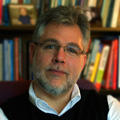
Russ Shafer-Landau
Russ Shafer-Landau

Russ Shafer-Landau is a renowned philosopher and author, known for his contributions to ethics and political philosophy. Born in 1963, he graduated from Harvard University with a Ph.D. in philosophy. Shafer-Landau's work has had a significant impact both in academic circles and among the public, with his research focusing on moral theory, liberal political philosophy, and issues of justice in ethics. more

You May Also Like

“Right in the middle of a Stevie Wonder concert, right in the middle of this musical trance, this electronic night with thousands in the stadium, a night worthy of Metropolis with the thousands of cerebro-motor slaves gyrating to the rhythm of synthesizers and all the lighter flames serving as a luminous ovation - a new ritual worthy of the catacombs - I feel a total coldness, complete indifference to this faked music, without the slightest melodic phrase, music of a pitiless technicity. Everything is both visceral and coded at the same time. A strictly regulated release, a cold ceremonial, very far in human terms from its own musical savagery, which is merely that of technology. Only the visual impact remains, the spectacle of the crowd and its phYSical idolatry, particularly as the idol is blind and directs the whole thing with his dead eyes, exiled from the world and its tumult, but absorbing it all like an animal. The same air of sacredness as with Borges. The same translucidity of the blind, who enjoy the benefits of the silence of light and therefore of blackmail by lucidity. But modern idolatry is not easily accepted; the bodies stay clenched. Technicity wins out over frenzy in the new metropolitan nights. Growing old is not the approach of a biological term. It is the ever lengthening spiral which distances you from the physical and intellectual openness of your youth. Eventually, the spiral becomes so long that all chance of return is lost. The parabola becomes eccentric, and the peak of one's life-curve gets lost in space. Simultaneously the echo of pleasures in time becomes shorter. One ceases to find pleasure in pleasure. Things live on in nostalgia, and their echo becomes that of a previous life. This is the second mirror phase, and the beginning of the third age.”