Quotessence
Home / Quotes / Quote by Vladimir Nabokov

Quote by Vladimir Nabokov

“We are liable to miss the best of life if we do not know how to tingle, if we do not learn to hoist ourselves just a little higher than we generally are in order to sample the rarest and ripest fruit of art which human thought has to offer.”

Quote by Vladimir Nabokov

Work

Look at the Harlequins!

This book is a compilation of various short stories that showcase the Harlequin characters in their romantic and adventurous escapades, capturing the essence of the Harlequin genre. more

Author
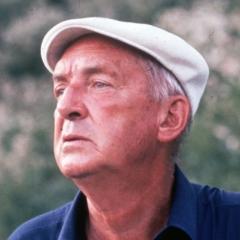
Vladimir Nabokov
Vladimir Nabokov

Russian-born American novelist, best known for his novel 'Lolita'. Nabokov is renowned for his unique literary style and profound use of language and symbolism. more

You May Also Like

“The Door of No Return - real and metaphoric as some places are, mythic to those of us who are scattered in the Americas today. To have one’s belonging lodged in a metaphor is voluptuous intrigue; to inhabit a trope; to be a kind of fiction. To live in the Black Diaspora I think is to live in a fiction - a creation of empires, and also self-creation. It is to be being living inside and outside herself. It is to apprehend the the sign one makes yet to be unable to escape it except in radiant moments of ordinariness made like art. To be a fiction in search of its most resonant metaphor then is even more intriguing.”

“Jimmy said, "We survived slavery. Think about that. Not because we were strong. The American Indians were strong, and they were on their own land. But they have not survived genocide. You know how we survived?" I said nothing. "We put surviving into our poems and into our songs. We put it into our folk tales. We danced surviving in Congo Square in New Orleans and put it in our pots when we cooked pinto beans. We wore surviving on our backs when we clothed ourselves in the colors of the rainbow. We were pulled down so low we could hardly lift our eyes, so we knew, if we wanted to survive, we had better lift our own spirits. So we laughed whenever we got the chance.”

“I was asked by a concerned church-goer: "Is your relationship with God okay?" and I answered "My relationship with God is far better than yours. You have to be in a certain place, with a certain group of people, pray at certain days of the week, read the Bible at certain times of the day; all in order to have a relationship with God. But I am with God from the moment I wake up, to the moment I fall asleep at night, I am with God wherever on this earth that I wander to, and whosoever I may be with! I may be sitting on the subway, and I am with God. I can assure you that I am closer to God than you are.”

“Music is the 'pure' art par excellence. It says nothing and has nothing to say. Never really having an expressive function, it is opposed to drama, which even in its most refined forms still bears a social message and can only be 'put over' on the basis of an immediate and profound affinity with the values and expectations of its audience. The theatre divides its public and divides itself. The Parisian opposition between right-bank and left-bank theatr, bourgeois theatre and avant-garde theatre, is inextricably aesthetic and political.”

“But the very question of whether photography is or is not an art is essentially a misleading one. Although photography generates works that can be called art --it requires subjectivity, it can lie, it gives aesthetic pleasure-- photography is not, to begin with, an art form at all. Like language, it is a medium in which works of art (among other things) are made. Out of language, one can make scientific discourse, bureaucratic memoranda, love letters, grocery lists, and Balzac's Paris. Out of photography, one can make passport pictures, weather photographs, pornographic pictures, X-rays, wedding pictures, and Atget's Paris. Photography is not an art like, say, painting and poetry. Although the activities of some photographers conform to the traditional notion of a fine art, the activity of exceptionally talented individuals producing discrete objects that have value in themselves, form the beginning photography has also lent itself to that notion of art which says that art is obsolete. The power of photography --and its centrality in present aesthetic concerns-- is that it confirms both ideas of art. But the way in which photography renders art obsolete is, in the long run, stronger.”