Quotessence
Home / Quotes / Quote by Rebecca Black

Quote by Rebecca Black

“The best thing you can do if you had put something on the internet and watched it spiral out of control is be nice to yourself. Especially when you get on the internet, you have opened yourself up to everybody's opinion, and not everybody's going to be nice. And if you can at least be nice to yourself, that'll help you so much - though it's easier said than done.”

Quote by Rebecca Black

Author
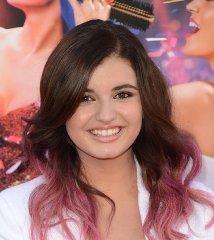
Rebecca Black
Rebecca Black

Rebecca Black, born on June 21, 1997, is an American singer. She gained widespread recognition for her song 'Friday' in 2011, which became a viral phenomenon on YouTube, propelling her to fame in the online world. more

You May Also Like

“I love to make music, and if I could do this forever I'd be happy. But if I can help any other kid out there or anyone - and show them that "life throws weird stuff at you all the time. It's OK to get down, but it's bringing yourself back from that that's really going to make you who you are," if I can help anyone out there feel a little bit less alone or make them feel like their voice is being heard through me or my music, that is the goal.”

“At my wedding, my bridesmaids said, "You're the funniest person we've ever met." I hope I make people laugh, I hope I make people feel comfortable. I like to go out and have a good time. I don't take myself too seriously. I never have. This is all one spinning granite planet, and I'm lucky I get to act and do what I love. Life is good. I'm not going to compete for attention. You find that a lot in Hollywood with actresses, where you're just like, "Just chill out.".”

“I feel like I've found my voice in the actor's business. Because when you first get out of school and you're looking for jobs, you don't want to rock the boat - you can't rock the boat. You'll get known for being that sassy girl that, like, has no résumé and no one wants to work with her. But now, I'm "proven," at least in the television world, and hopefully in the theater world. I'm working on the film world. Unfortunately, it takes a while to build that kind of street cred. It's been recently that I even started to have more confidence in myself.”

“I don't think I could ever reach the giddy heights of the inspired comedy and tragedy that's happening now in Washington. I mean, it's mesmerizing to watch but it's also scary. For me, the scariest thing about it is all those people who were so absolutely opposed to Donald Trump before he got elected, and then have just drifted away and kept quiet. It goes back to: We've always got to be vigilant about democracy because it can go wrong.”

“Originally I had a fear of rejection at the auditions, which is a lack of self-confidence ultimately. Now I have a production company and when you can look behind the scenes at the casting process, you know it's not about rejection. It might have been the most amazing performance ever, but if the person is too tall, too short, too brown, too white, has blond hair or whatever it is, then not getting the gig may have nothing to do with the performance. You have to learn to treat auditioning as matter-of-factly as drinking a glass of water.”

“Acting for me is liberating. It's almost like therapy, because I grew up in a blue-collar environment where you're not supposed to have feelings. So it's freeing to be in a safe place like a TV or film set where you discover feelings, and where you're supposed to be open and honest with everybody while exposing the weakest parts of you. And then when people congratulate you on revealing the weakest part of who you are, then you start realizing that that might not be weakness. It might be a different kind of strength.”

“Being behind the camera you have control; you have the ability to make decisions for characters, for where the story line's going to go, how you want to put it out there, how you want to edit it. Acting is like where you paint on the canvas, and being behind the camera is like being either the paint or the paintbrush. They're both a part of the creative process, it's just that they have two different functions.”

“I try to discover the character's primary motivation. In a screenplay, you can make up a hundred different variables of a character. Is he there for love or respect, or is he there out of fear? What's he doing? Why is he doing it? Then I can build on the intricacies. Does he pick his fingernails? Does he always do this when he's lying? All the little things that come with it. But it's also like, if you're doing a caricature and you're like, "I want to do a blue-collar guy from Jersey," you have to go and do the research on the region, the who, what and why.”

“When you're on a movie and the production department says, "We need old photographs of you - your character - when you were 20-years-old." I usually tell them it's in storage or I had a fire. I go back to these old photos and there's never a good photo or they're of times that I'm so glad I'm out of. They have nothing to do with the character that you're playing, so it feels false. That's one of the hardest things for me in terms of looking back.”