Quotessence
Home / Quotes / Quote by Laozi

Quote by Laozi

“What makes a kingdom great is its being like a down-flowing river,--the central point towards which all the smaller streams under Heaven converge; or like the female throughout the world, who by quiescence always overcomes the male. And quiescence is a form of humility.”

Quote by Laozi

Author
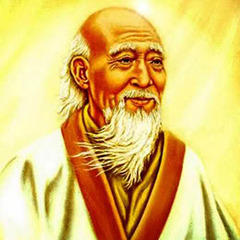
Laozi
Laozi

Laozi, also known as Lao Dan, was a renowned ancient Chinese philosopher and the founder of the Taoist school of thought. His birth and death dates are approximately 604 BC to 531 BC. Laozi advocated for顺应自然 (yielding to nature) and the principle of non-action (wu wei), which had a profound impact on Chinese philosophy, culture, and politics. more

You May Also Like

“Therefore, if a great kingdom humbles itself before a small kingdom, it shall make that small kingdom its prize. And if a small kingdom humbles itself before a great kingdom, it shall win over that great kingdom. Thus the one humbles itself in order to attain, the other attains because it is humble. If the great kingdom has no further desire than to bring men together and to nourish them, the small kingdom will have no further desire than to enter the service of the other. But in order that both may have their desire, the great one must learn humility.”

“Therefore the Sage, wishing to be above the people, must by his words put himself below them; wishing to be before the people, he must put himself behind them. In this way, though he has his place above them, the people do not feel his weight; though he has his place before them, they do not feel it as an injury. Therefore all mankind delight to exalt him, and weary of him not.”

“The best soldiers are not warlike; the best fighters do not lose their temper. The greatest conquerors are those who overcome their enemies without strife. The greatest directors of men are those who yield place to others. This is called the Virtue of not striving, the capacity for directing mankind; this is being the compeer of Heaven. It was the highest goal of the ancients.”

“What most of us need, almost more than anything, is the courage and humility really to ask for help, from the depths of our hearts: to ask for the compassion of the enlightened beings, to ask for purification and healing, to ask for the power to understand the meaning of our suffering and transform it; at a relative level to ask for the growth in our lives of clarity, peace, and discernment, and to ask for the realization of the absolute nature of mind that comes from merging with the deathless wisdom mind of the master.”