Quotessence
Home / Quotes / Quote by Anika Noni Rose

Quote by Anika Noni Rose

“Very often the people who are shooting your film do not look like you if your film is brown-centric in some way. What is very interesting is to be going through these scenarios and turning around and looking at so many faces that are not yours. Even though those faces are looking at you in love, it puts you in a space when you are on a plantation in that condition. I think that it allows you to see further into possibly what that place really was for someone else, except thank God we're with people who love and respect us.”

Quote by Anika Noni Rose

Author
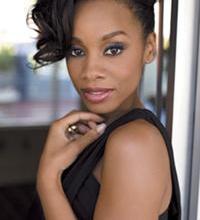
Anika Noni Rose
Anika Noni Rose

Anika Noni Rose, born on September 6, 1972, is an accomplished American singer known for her unique musical style, which blends elements of R&B, jazz, and gospel music. She has gained widespread recognition and acclaim for her talents. more

You May Also Like

“Saudi Arabia is so conservative. At first there were photographs of women I took that I couldn't publish - of women without their abayas. So I started writing out little anecdotes about things I couldn't photograph and wove it in with a more obscure picture and called it "moments that got away". I realised these worked as well as the photographs by themselves. There are a lot of photographers who feel the story is all in the photographs but I really believe in weaving in complementary words with the pictures.”

“When I first asked to take pictures of women at their homes, I was using my formal camera and I struggled to get the shots because I was still very much in the role of the photographer. Then the next time I had this little digital camera and their response to me would be completely different - I was a friend and I got new kinds of pictures. I was always treading a line between photographer and friend.”

“At the beginning of my career, a more senior photographer told me to shoot stories on women and I didn't want to. But I spent two and a half years in India and chose to do stories about women because I was shocked by their treatment. My stories in the Middle East and on the border of Europe and Asia were a response to my time in India. They weren't driven by a feminist idea but when you're moved by women's issues in these countries you can't help becoming a feminist somehow.”

“I literally went in and auditioned and got the part of "sounds like J.K. Simmons." I've heard people say a "J.K. Simmons type, but younger" or "J.K. Simmons, but with hair" or "J.K. Simmons but Mongolian." It's often "J.K. Simmons but...". You think you're on top of the world and they're asking for a "J.K. Simmons-type" and then, before you know it, they're asking for a "J.K. Simmons only younger." The next step is for a "J.K. Simmons-type...Oh, you mean he's still alive?"”