“In mathematics, if a pattern occurs, we can go on to ask, Why does it occur? What does it signify? And we can find answers to these questions. In fact, for every pattern that appears, a mathematician feels he ought to know why it appears.”
Quote by W. W. Sawyer
Work
Prelude to Mathematics
This book serves as a foundational guide to mathematics, covering key topics such as logic, set theory, and number theory. It is designed to help readers develop a strong understanding of the basic principles that underpin the discipline, with a focus on clarity and accessibility. more
Author
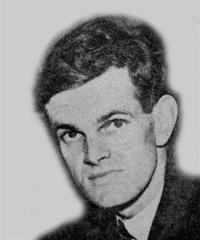
W. W. Sawyer
W. W. Sawyer (1911-2008) was a British mathematician, mathematics educator, and popular science writer, best known for his accessible and engaging books on mathematics. Born in England, he taught at several universities and dedicated his career to making mathematics enjoyable. His works, such as 'Mathematician's Delight,' have been translated into many languages, inspiring generations of math enthusiasts. more
You May Also Like
“Calculus is the most powerful weapon of thought yet devised by the wit of man.”
Source: Three-Dimensional Geometry and Topology, Volume 1
Source: The Neumann Compendium
Source: Gesammelte Abhandlungen
Source: Aims of Education
“It was God who made me so beautiful. If I weren't, then I'd be a teacher.”