Quotessence
Home / Quotes / Quote by Antoine Lavoisier

Quote by Antoine Lavoisier

“If everything in chemistry is explained in a satisfactory manner without the help of phlogiston, it is by that reason alone infinitely probable that the principle does not exist; that it is a hypothetical body, a gratuitous supposition; indeed, it is in the principles of good logic, not to multiply bodies without necessity.”

Quote by Antoine Lavoisier

Author
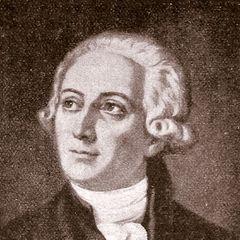
Antoine Lavoisier
Antoine Lavoisier

Antoine Lavoisier (August 26, 1743 – May 8, 1794) was a French chemist, widely regarded as the father of modern chemistry. He disproved the phlogiston theory through quantitative experiments, identified the role of oxygen in combustion, and named oxygen and hydrogen. Lavoisier also reformed chemical nomenclature, making chemical language systematic. His book 'Elements of Chemistry' laid the foundation of modern chemistry. However, during the French Revolution, he was executed by guillotine due to his former role as a tax collector. more

You May Also Like

“Imagine a school-boy who has outgrown his clothes. Imagine the repairs made on the vestments where the enlarged frame had burst the narrow limits of its inclosure. Imagine the additions made where the projecting limbs had fairly and far emerged beyond the confines of the garment. Imagine the boy still growing, and the clothes, mended all over, now more than ever in want of mending - such is chemistry, and such its nomenclature.”

“On the terrace of the Pepiniere, the 150 pupils of the Institut Chemique talk chemistry as they leave the auditoria and the laboratory. The echoes of the magnificent public garden of the city of Nancy make the words reverberate; coupling, condensation, grignardization. Moreover, their clothes stay impregnated with strong and characteristic odours; we follow the initiates of Hermes by their scent. In such an environment, how is it possible not to be productive?”

“The advances of biology during the past 20 years have been breathtaking, particularly in cracking the mystery of heredity. Nevertheless, the greatest and most difficult problems still lie ahead. The discoveries of the 1970's about the chemical roots of memory in nerve cells or the basis of learning, about the complex behavior of man and animals, the nature of growth, development, disease and aging will be at least as fundamental and spectacular as those of the recent past.”

“Upon the whole, Chymistry is as yet but an opening science, closely connected with the usefull and ornamental arts, and worthy the attention of the liberal mind. And it must always become more and more so: for though it is only of late, that it has been looked upon in that light, the great progress already made in Chymical knowledge, gives us a pleasant prospect of rich additions to it. The Science is now studied on solid and rational grounds. While our knowledge is imperfect, it is apt to run into error: but Experiment is the thread that will lead us out of the labyrinth.”