Quotessence
Home / Quotes / Quote by Bertrand de Jouvenel

Quote by Bertrand de Jouvenel

“The idea so commonly found that scepticism leads to toleration arises from considering the effects of scepticism in the intellectual who takes no active part - not its effects in the man of action. In the man of action, moral relativism and scepticism as to the absolute and universal value of his priunciples are no obstacle to a fanatical belief in their immediate value as his own clan at the actual moment; they do not weaken in the least his will to impose his principles. How should he glimpse a soul of truth in the principles of others, entitling them to respect, when he does not believe in noble origins of this kind even for his own principles?”

Quote by Bertrand de Jouvenel

Work

Sovereignty: An Inquiry into the Political Good

Browse quotes and source details for this work. more

Author
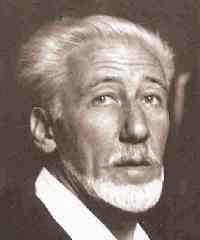
Bertrand de Jouvenel

Bertrand de Jouvenel was a French philosopher known for his profound contributions to political philosophy. His ideas were deeply influenced by classical political philosophy, particularly focusing on issues of power, freedom, and democracy. more

You May Also Like

“Implicit … in the very idea of ordered liberty, was a rejection of absolute truth, the infallibility of any idea or ideology or theology or “ism,” any tyrannical consistency that might lock future generations into a single, unalterable course, or drive both majorities and minorities into the cruelties of the Inquisition, the pogrom, the gulag, or the jihad. ... A rejection of absolutism, in all its forms, may sometimes slip into moral relativism or even nihilism, an erosion of values that hold society together…”

“If people have no respect for God, no love for their Maker, I would ask the question another way: Why not pillage, rape, persecute and murder? If it feels good, and they can get away with it, why not? If God is dead or does not exist, as these people believe, why are not all things permitted? Why should they restrain themselves? Because it’s just wrong? Because it’s not the way civilized people behave? Because what goes around comes around? Because they’ll end up feeling terrible inside? Within tidy circles of properly socialized and reasonable people, such appeals can seem like they actually have the power to restrain people from doing what they otherwise feel like doing. But in the real world outside the philosophy seminar room, oppressors frankly don’t care that you think it’s just wrong. Who are you, they ask, to foist your random moral intuition on them? Who are you to tell them or the lords of the Third Reich what civilized people should and should not do? If what goes around tends to come around, then there’s no moral problem, only a practical problem of making sure it doesn’t come around to you. They think, Fine, if being brutal makes you feel terrible inside, then don’t do it. But it makes me feel powerful, alive, exhilarated and masterful, so quit whining — unless you want to try to stop me. This description of a dark Nietzschean world of self-will — a vacuum devoid of moral authority or spiritual resources for good — used to sen excessively melodramatic to me. But then I got out more. The world is truly full of brutal oppression because humans have rejected their Maker, the source of all goodness, mercy, compassion, truth, justice, and love.”

“A rejection of absolutism, in all its forms, may sometimes slip into moral relativism or even nihilism, an erosion of values that hold society together, but for most of our history it has encouraged the very process of information gathering, analysis, argument, and persuasion which allows us to make better, if not perfect, choices – not only about the means to our ends, but also the ends themselves.”

“Cultural relativism has used this deceit to gain power. The absolute relativists want to assert their sincere desire for dialogue UNTIL they become a majority. Then they often want to settle issues by either exclusion or coercion. They first argue for democratic fairness, but when they acquire their majority, they are tempted to turn immediately to a triumphalism that assumes that liberal justice has triumphed. From then on, dialogue about truth is forbidden, and about absolute truth is absolutely forbidden.”

“This is a speech we've all heard before. From the con artists who aren't like the burglars, who aren't like the armed robbers, who only ever broke a bone if the victim had it coming and the murderers who made 'one mistake' and are forced to pay for it for the rest of their lives. They want to know what you're doing about the real criminals, the rapists and the paedophiles. Who want to know why you're wasting resources on them when we should be tackling female genital mutilation or political corruption”

“Any attempt to “cover everything” would succeed only in producing a completely unmanageable mountain of data. Indeed, in proportion to its increase, which has been enormous in the past half century, the sheer volume of historical scholarship—what Daniel Lord Smail has recently called “the inflationary spiral of research overproduction, coupled with an abiding fear of scholarly exposure for not keeping up with one’s field”—paradoxically militates against comprehension of the past in relationship to the present. A different approach is needed if we are to avoid being overwhelmed by specialized scholarship, the proliferation of which tends to reinforce ingrained assumptions about historical periodization that in turn hamper an adequate understanding of change over time.”