“I have thought it my duty to exhibit things as they are, not as they ought to be.”
Quote by Alexander Hamilton
Work
Correspondence. 1769-1789
This book compiles a selection of personal correspondence spanning the years 1769 to 1789, offering a glimpse into the social and cultural context of the era through the eyes of those who lived it. more
Author
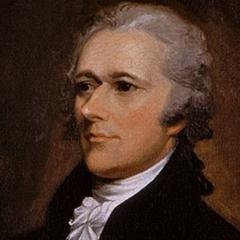
Alexander Hamilton
Alexander Hamilton was a Founding Father of the United States, born on January 11, 1757, and died on July 12, 1804. He played a crucial role in the American Revolutionary War and was instrumental in the drafting of the U.S. Constitution. As the first Secretary of the Treasury, Hamilton promoted fiscal stability and economic growth, establishing the First Bank of the United States and proposing solutions for federal debt. His ideas and policies had a profound impact on the early political and economic development of the United States. more
You May Also Like
Source: The federalist papers
Source: The Federalist: A Commentary on the Constitution of the United States
Source: No exit, and three other plays
Source: Altona ; Men without shadows ; The flies
Source: Being and Nothingness
Source: Notebooks for an Ethics
“Ah! Do not judge the gods, young man, they have painful secrets.”