Quotessence
Home / Quotes / Quote by Alfred Korzybski

Quote by Alfred Korzybski

Author

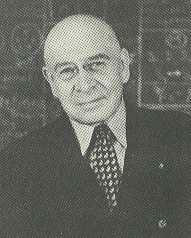
Alfred Korzybski
Alfred Korzybski

Alfred Korzybski, born on July 3, 1879 in Poland and died on March 1, 1950 in the United States, was a renowned philosopher, writer, and scientist. He is best known for his research on language, thought, and cognition, which had a profound impact on the fields of cognitive science and linguistics. Korzybski's most famous contribution is the 'Korzybski Hypothesis,' which states that human thought is limited by language and symbols. This theory has had a significant influence on the development of cognitive science and linguistics. more

You May Also Like

“Leibniz endeavored to provide an account of inference and judgment involving the mechanical play of symbols and very little else. The checklists that result are the first of humanity's intellectual artifacts. They express, they explain, and so they ratify a power of the mind. And, of course, they are artifacts in the process of becoming algorithms.”

“When I ask people to contemplate selflessness, the sometimes react as if I've asked them to put their house on the market or give away all their money. If there was a self that existed in the way we think, discovering selflessness would be like putting our house on the market. But in the Buddhist tradition, the discovery of selflessness is called "completely joyful." It's not called "the raw end of the deal," or "I'd rather go back to bed," or "This is scary and depressing."”

“Self-reflection is the gateway to freedom. It also brings greater appreciation and enjoyment. We begin to enjoy spending time with our own mind, and we enjoy reflecting on our experience of the teachings. Like the sun emerging from behind the clouds, the teachings of the dharma become clear.”

“This whole electric universe is a complex maze of similar tensions. Every particle of matter in the universe is separated from its condition of oneness, just as the return ball is separated from the hand, and each is connected with the other one by an electric thread of light which measures the tension of that separateness.”