Quotessence
Home / Quotes / Quote by G. H. Hardy

Quote by G. H. Hardy

Work

A Mathematician's Apology

This work delves into the essence of mathematics, discussing its purpose, the motivations of mathematicians, and the significance of mathematical inquiry. The author reflects on the challenges and rewards of a life dedicated to mathematics, offering insights into the intellectual and personal aspects of the field. more

Author
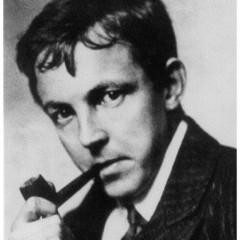
G. H. Hardy
G. H. Hardy

G. H. Hardy was a renowned British mathematician known for his contributions to number theory and mathematical analysis. Born on February 7, 1877, he passed away on December 1, 1947. Hardy is respected for his unique mathematical style and profound insights into mathematical problems. more

You May Also Like

“I was introduced to Mr. Davy, who has rooms adjoining mine (in the Royal Institution); he is a very agreeable and intelligent young man, and we have interesting conversation in an evening; the principal failing in his character as a philosopher is that he does not smoke.”

“In describing the honourable mission I charged him with, M. Pernety informed me that he made my name known to you. This leads me to confess that I am not as completely unknown to you as you might believe, but that fearing the ridicule attached to a female scientist, I have previously taken the name of M. LeBlanc in communicating to you those notes that, no doubt, do not deserve the indulgence with which you have responded.”

“It has become, in my view, a bit too trendy to regard the acceptance of death as something tantamount to intrinsic dignity. Of course I agree with the preacher of Ecclesiastes that there is a time to love and a time to die - and when my skein runs out I hope to face the end calmly and in my own way. For most situations, however, I prefer the more martial view that death is the ultimate enemy - and I find nothing reproachable in those who rage mightily against the dying of the light.”

“It was eerie. I saw myself in that machine. I never thought my work would come to this. Upon seeing a distorted image of his face, reflected on the inside cylindrical surface of the bore while inside an MRI (magnetic-resonance-imaging) machine-a device made possible by his early physical researches on nuclear magnetic resonance (1938).”