Quotessence
Home / Quotes / Quote by Charles Ponzi

Quote by Charles Ponzi

Author

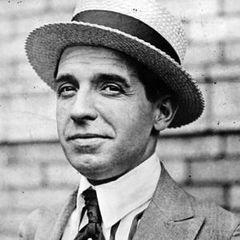
Charles Ponzi
Charles Ponzi

Charles Ponzi, born on March 3, 1882 in Italy, was a prominent businessman. He became infamous in the early 20th century for his involvement in the Ponzi scheme, a fraudulent financial investment scam that defrauded millions of investors. He died on January 18, 1949. more

You May Also Like

“I am determined to elect a president of our choosing this year and one who will be deeply indebted, and who will recognize his indebtedness. Since I am willing to go beyond all limitations on this, I think we should be able to select a candidate and a party who knows the facts of political life....If we select Nixon, then he, I know for sure knows the facts of life.”

“Bad things will happen and good things too. Your life will be full of surprises. Miracles happen only where there has been suffering. So taste your grief to the fullest. Don’t try and press it down. Don’t hide from it. Don’t escape. It is life too. It is truth. But it will pass and time will put a strange honey in the bitterness. That’s the way life goes.”

“Reading, therefore, is a co-production between writer and reader. The simplicity of this tool is astounding. So little, yet out of it whole worlds, eras, characters, continents, people never encountered before, people you wouldn’t care to sit next to in a train, people that don’t exist, places you’ve never visited, enigmatic fates, all come to life in the mind, painted into existence by the reader’s creative powers. In this way the creativity of the writer calls up the creativity of the reader. Reading is never passive.”

“The Nigerian storyteller Ben Okri says that ‘In a fractured age, when cynicism is god, here is a possible heresy: we live by stories, we also live in them. One way or another we are living the stories planted in us early or along the way, or we are also living the stories we planted — knowingly or unknowingly — in ourselves. We live stories that either give our lives meaning or negate it with meaninglessness. If we change the stories we live by, quite possibly we change our lives.’”