Quotessence
Home / Quotes / Quote by Paul J. Crutzen

Quote by Paul J. Crutzen

“In discussing the state of the atmosphere following a nuclear exchange, we point especially to the effects of the many fires that would be ignited by the thousands of nuclear explosions in cities, forests, agricultural fields, and oil and gas fields. As a result of these fires, the loading of the atmosphere with strongly light absorbing particles in the submicron size range (1 micron = 10-6 m) would increase so much that at noon solar radiation at the ground would be reduced by at least a factor of two and possibly a factor of greater than one hundred.”

Quote by Paul J. Crutzen

Author
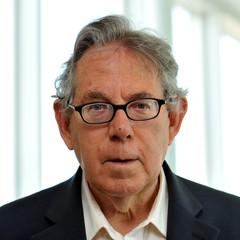
Paul J. Crutzen
Paul J. Crutzen

Paul J. Crutzen is a renowned Dutch chemist born on December 3, 1933. He has made significant contributions to the fields of atmospheric chemistry and climate change, particularly for his research on the destruction of the ozone layer. Crutzen was awarded the Nobel Prize in Chemistry in 1995 for his outstanding achievements in chemistry. more

You May Also Like

“Today when the public thinks of the products of science it is likely to think about environmental problems, an unproductive armament industry, careless or dishonest 'scientific' reports, Livermore cheers for 'nukes forever' and a huge amount of self-serving noise on every subject from global warming to 'the face of God'.”

“For this knowledge of right living, we have sought a new name... . As theology is the science of religious life, and biology the science of [physical] life ... so let Oekology be henceforth the science of [our] normal lives ... the worthiest of all the applied sciences which teaches the principles on which to found... healthy... and happy life.”

“I would like to start by emphasizing the importance of surfaces. It is at a surface where many of our most interesting and useful phenomena occur. We live for example on the surface of a planet. It is at a surface where the catalysis of chemical reactions occur. It is essentially at a surface of a plant that sunlight is converted to a sugar. In electronics, most if not all active circuit elements involve non-equilibrium phenomena occurring at surfaces. Much of biology is concerned with reactions at a surface.”

“It is an old saying, abundantly justified, that where sciences meet there growth occurs. It is true moreover to say that in scientific borderlands not only are facts gathered that [are] often new in kind, but it is in these regions that wholly new concepts arise. It is my own faith that just as the older biology from its faithful studies of external forms provided a new concept in the doctrine of evolution, so the new biology is yet fated to furnish entirely new fundamental concepts of science, at which physics and chemistry when concerned with the non-living alone could never arrive.”