“These bright roofs, these steep towers, these jewel-lakes, these skeins of railroad line - all spoke to her and she answered. She was glad they were there. She belonged to them and they to her. . . . She had not lost it. She was touching it with her fingertips. This was flying: to go swiftly over the earth you loved, touching it lightly with your fingertips, holding the railroads lines in your hand to guide you, like a skein of wool in a spider-web game - like following Ariadne's thread through the Minotaur's maze, Where would it lead, where?”
Quote by Anne Morrow Lindbergh
Author
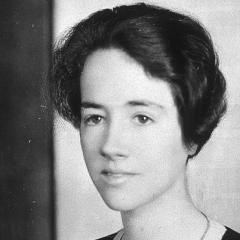
Anne Morrow Lindbergh
Anne Morrow Lindbergh was an accomplished American author known for her profound personal experiences and elegant literary style. Born on June 22, 1906, and passing away on February 7, 2001, she was not only Charles Lindbergh's wife but also an independent writer and thinker. Her writing career began in the 1930s, with works spanning novels, poetry, and prose. Her first book, 'We Are the Ship,' is a memoir about her life with her husband. Despite the challenges in her marriage, she remained passionate about life and writing. Her other notable works include 'Gift from the Sea' and 'The Aviator's Wife,' which delve into themes of female identity, marriage, and the deeper questions of human existence. Lindbergh's writing has been praised for its insightful observations and beautiful language. Her works have had a wide-reaching impact both in the United States and internationally, influencing subsequent writers and considered an important figure in 20th-century American literature. more
You May Also Like
“It is not unreasonable to look upon Concorde as a miracle.”
Source: NORTH TO THE ORIENT
Source: With No Apologies
“'Tis a month before the month of May, And the spring comes slowly up this way.”
Source: The Complete Works of Samuel Taylor Coleridge: Poetry, Plays, Literary Essays, Lectures, Autobiography and Letters (Classic Illustrated Edition): The Entire Opus of the English poet, literary critic and philosopher, including The Rime of the Ancient Mariner, Kubla Khan, Christabel, Lyrical Ballads, Conversation Poems and Biographia Literaria
“Tantarrara! the joyous Book of Spring Lies open, writ in blossoms.”
Source: Poems
“Everything holds its breath except spring. She burts through as strong as ever.”
Source: My Study Windows